12.30.2010

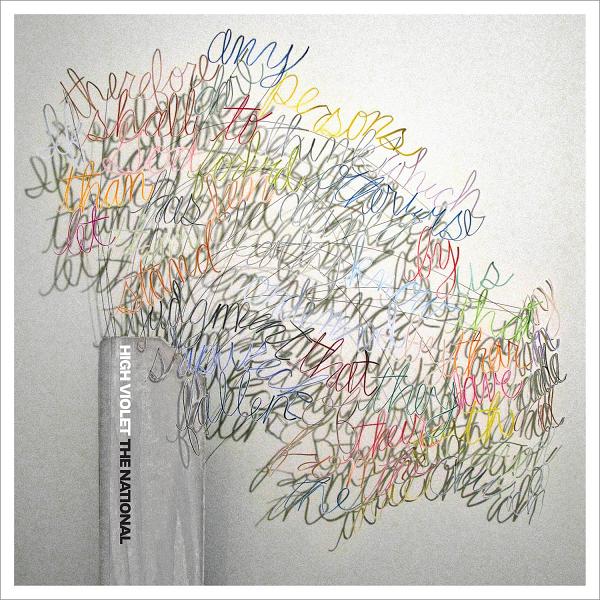
#8. The National - High Violet

Although The National has always been a bit too serious to make it big in the pop world and a bit too simple to create any big splashes in the post-rock world, these guys have been patiently creating dark and brooding rock for years now. And although it would be easy to write off High Violet as more of the same, it might just be The National's best release yet. Backed by one of the most solid rhythm sections around, the songwriting force that is Matt Berninger and Aaron Dressner truly shines in High Violet. Matt Berninger, the lead vocalist, narrates us through eleven heartbreakingly ordinary stories that resonate with the economically recessed, socially estranged, and depression pill-addicted generations of lowbrow America. Although The National isn't into making preachy political statements or delivering social commentaries, their emotional profile snapshots paint a particularly bleak depiction of modern life. Dressner's heroes range from paranoid fathers ("Afraid of Everyone") to high school runaways ("Anyone's Ghost") and doomed lovers ("Runaway"), presenting them just as they are without ever looking down on them. In other words, when Dressner mutters "Sorrow found me when I was young/Sorrow waited, sorrow won", seemingly under his breathe, you'd better believe he means it; there isn't an ounce of insincerity in this guy's bones. And just as The National seeks to capture these unique moments of emotion and honesty in words, they also match their themes with seemingly ordinary, but daringly unique moments of music as well.

Although their traditional 5-piece lineup is down-to-earth and honest, they manage to make some pretty unusual sounds feel like home as well. The opening track, "Terrible Love", begins with electric guitar distortions and feedback that are just the right amount lo-fi and just the right amount triumphant rock. Later on, in instant classics like "Bloodbuzz Ohio", Bryan Devendorf's upbeat drumming contrasts with the monotonous rumblings of Berninger, like memories of the past trying to conjure up emotions out of an aging man. It is refreshing to hear a band that isn't obsessed with trying to reinvent itself all the time, but instead comfortable with who they are. Like they have successfully done in the past three albums, The National continues to be the under-appreciated serious rock band that they always have been, successfully capturing the provocative moments of modern life, in all their deep emotion and complexity.

12.27.2010

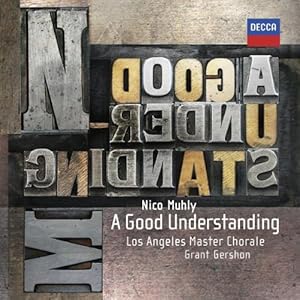
#9. Nico Muhly - I Drink the Air Before Me/A Good Understanding

It's been another big year for the young, classical/pop mediator, Nico Muhly. The New York composer has been going strong on a recent string of successful pop arrangements, commissioned compositions, and personal record releases. This year's list included writing all the orchestral and piano arrangements for Jonsi's Go, playing on The National's High Violet record, and releasing two albums of his own work, which combined have made it to #9 on my countdown. I Drink the Air Before Me is a work commissioned by Stephen Petronio to accompany his dance of the same name, inspired by a raging sea storm and a line from Shakespeare's "Tempest". I Drink the Air Before Me is a stunning expose of Muhly's musical language and technique which manages to find a satisfying balance between postminimalist romanticism and pop aesthetics. Armed with a small, but convincing character chamber ensemble, Muhly uses jerky rhythms and contrasting melodic and harmonic styles to create a unique sound that is both forward-looking and collaborative. The different instruments are meant to represent a quirky cast of characters that might live by the sea: "a busybody flute, a wise viola, and the masculine, workmanlike bassoon, trombone, and upright bass. The piano acts as an agitator, an unwelcome visitor, bearing with it aggressive electronic noises and rhythmic interruptions." These different personalities and styles are clearly shown in what might be the best track from the album, "Fire Down Below". Using energetic, Stravinsky-like clashes on both piano and electronics, Muhly disrupts his majestic choral melodies and minimalist chamber techniques in the same way that Sufjan Stevens plays an electric guitar solo in a folk song. In other tracks Muhly sounds more distinctly like a younger, more edgy Steve Reich, ("Music Under Pressure - 1 Flute"), while in others he shows off his impressionistic lyricism with melodic choral passages and drone-based influences ("One Day Tells Its Tale To Another"). Although I haven't seen the dance number that this album is based around, the unfortunate dancers that must move to these sounds will have a hard time keeping up with this astounding piece of music.

A Good Understanding is a collection of choral work that feels much more standalone then the dance accompaniment of I Drink the AIr Before Me. The first seven tracks of the album are Muhly's interpretation of contemporary composers' interest in ancient church music, here written in a cleverly traditional fashion that makes A Good Understanding is a great introduction to Nico Muhly for the classical world. You won't find anything here resembling Arvo Part, but this is certainly one of Muhly's most tranquil and settled works, standing in stark contrast to the spastic behaviors of I Drink the Air Before Me. While the first eight tracks deal with strictly religious traditional themes, the final series of songs entitled "Expect the Main Things From You" set three Walt Whitman poems to exciting and visceral backdrops that don't shy away from being big. I Drink the Air Before Me and A Good Understanding are both choral works, but present two very different sides of Muhly's ever expanding rubix cube personality. While in many of his other releases and arrangements he gracefully allows other artists and collaborators to shine through, here, Muhly is at the top of his game and finally sits comfortably in the spotlight. In many ways, Muhly hasn't written a seminal piece of music yet, but with each album he releases he is simultaneously redrawing the lines of classical music and tracing out his own profile as one of the most adaptable, exciting, and focused young musicians, not only classical composers, in the world today.

Here is "Fast Twitchy Organs", an excellent added bonus track to the album. It was the only thing I could find online!

12.22.2010

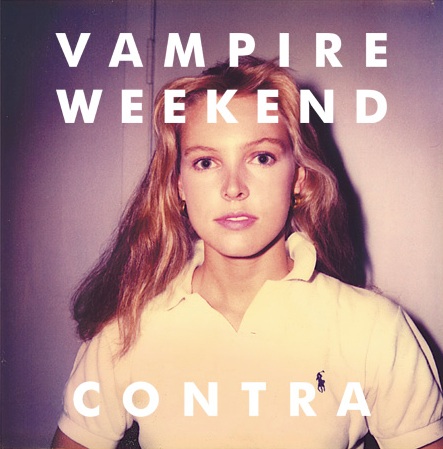
#10. Vampire Weekend - Contra

With every self-righteous bone inside of me, I wanted to dislike Contra. I went through the same thing when I first heard their debut album a couple years ago. Sure, the first album was a good listen, but I had decided it was just a passing fad; a mere distraction from the deeper, more convoluted experiences that lay in albums by Fleet Foxes, Kanye West, and TV on the Radio from that year. To my dismay, it turns out Vampire Weekend is almost just as likable in 2010 as it was in 2007 and Contra, if nothing else, is simply the most charming album of the year. It only took hearing the vocal modification, rattling percussion, and eloquent string passages of "California English" to realize that Contra was both a continuation and a fulfillment of something Vampire Weekend had begun in their first record. Contra covers much of the same ground Vampire Weekend fans would want, whether its the bubbling electronics of "White Sky", the world beats of "Horchata", or even the more ska-flavored "Cousins", many of the songs recall familiar eccentricities, but feel twice as strong here. In the particularly easygoing hit, "White Sky", Ezra Koenig shows off some impressive wordplay in the setting of a stroll down a Manhattan block that makes his attempts in their debut album look childish. Yes, Vampire Weekend is still the same light-hearted, polo-wearing band they've always been. Fortunately though, Vampire Weekend takes some necessary steps forward as well, even venturing into taking in some different influences and more serious themes. The indie electro-pop influenced, "Giving Up the Gun", which seems to about making peaceful lifestyle changes, became the single of 2010 for many a hipster this summer and for good reason. Vampire Weekend makes glowing little eclectic pop gems like "Giving Up the Gun" seem effortless.

Koenig has stated in multiple interviews that many of the lyrics in Contra speak of what he calls "first-world guilt", attempting to understand living in privilege and the guilt that comes with it. Although you could easily get through the album multiple times without thinking about such things, it is certainly nice to hear Koenig's understated thoughts on more emotionally potent songs like "Taxi Cab" and "I Think Ur a Contra". They still claim that people take them more serious than they take themselves though. In Contra, they persist, continuing to be difficult to pin down, slyly existing between genres and subgenres, and pretending to not have much to say. Following a lawsuit with the $2 million lawsuit with the former-model who is featured on the Contra cover, this attitude is more refreshing a stance than ever. Then again, that's always been what Vampire Weekend has been about all along: putting down the guns and tearing down the walls that separate people unnecessarily for the sake of just having a good time. Again, they make it look effortless.

12.21.2010

#11. Trent Reznor and Atticus Ross - The Social Network OST

The recent trend in the film industry is to hand over the reigns of film scores to pop stars and record producers to produce something original rather than just shoe-in previously recorded material. Whether its accessible (see Daft Punk's Tron: Legacy OST this year), straight up bizarre (see Animal Collective's Oddsac film "score"), or cinematically stunning (see Johnny Greenwood's There Will Be Blood film score), the results are always out of the ordinary. This year, what is being hailed by many as the best film of the year, David Fincher's The Social Network, also features the best soundtrack of the year with music by Nine Inch Nails rock-veteran Trent Reznor and record producer Atticus Finch. The early official trailers that featured cover of Radiohead's "Creep", sung by a choir and another that featured Kanye West's "Power", seemed like almost too perfect of fits to be true, but we ended up with is something far more ethereal and ominous. In so many ways, Trent Reznor and David Fincher are both two sides of the same coin and seemingly unlikely contributors to a film about the dramatization of the creation of Facebok. From Fincher claiming it to be a John Hughes-style melodrama to what the early overwrought trailers were showing, it was difficult to see what the director who is known for exploring the dark and psychological side of humanity in films like Fight Club would be doing with such a film. Meanwhile, in seeking music for the film, Fincher found something of a kindred spirit in the dark-ambient, instrumental Nine Inch Nails album, Ghosts, and before too long, Reznor and Ross would be creating the soundscapes behind which Mark Zuckerberg would exist.

Reviewing standalone film scores can be quite difficult at times because it is always the sign of a great film score when it is difficult to stand on its own, divorced from the film itself. In the same way that Fincher himself turned the unlikely story into something raw and relevant, Reznor's ominous textures and dubstep synths are so caught up in the characters and motifs of The Social Network that they turn a social networking website into a futuristic techno world where Mark Zuckerburg is the computer hacker hero of a cyberpunk tale of corporate greed, vengeance, and betrayal. What Reznor and Ross do is revolutionary in that they provide a space and context for the masterful script by Aaron Sorkin and the excellent performances of the cast to interact and say a lot of meaningful things about communication, technology, and friendship in the 21st century without ever saying them at all. In the first track, "Hands Cover Bruise", the innocent piano twinkles that begin the film is slowly choked and washed out by buzzing electronics and hysteric distortion that sounds like Death Cab for Cutie trying to wrestle over the Joker theme from the Dark Knight that is slowly taking over. Its hard not to imagine the piano themes that are threaded throughout the soundtrack as representing Zuckerburg who becomes both overwhelmed by his rise to fame while also remaining somewhat unchanged throughout. The tracks that follow range from upbeat electronic dance tracks that demand attention ("In Motion") and tastefully tense atmospheric tracks ("3:14 Every Night") that quietly stand in the background. And let's not forget the already infamous inclusion of an insanely schizophrenic version of "In the Hall of the Mountain King" that accompanies a particularly zany scene of the film. The film would a much different film if these guys were not involved and we should all be thankful for that. In conjuction with the film, Trent Reznor and Atticus Ross have created a film score that has sold me on two things that were never portrayed so convincingly. One, that the true "21st century schizo man" is not Kanye West, but instead Mark Zuckerberg. And two, that we are an entire generation of people singing the lyrics of "Creep".

Here is "Hands Cover Bruise":


And because its too good not to see:

12.19.2010

#12. Local Natives - Gorilla Manor

Its hard to explain Gorilla Manor, my pick for #12, without referencing some of indie pop's biggest other names: Grizzly Bear, Arcade Fire, and Fleet Foxes. However, in all honesty, the Local Natives' debut album doesn't sound much like any of those bands. Sure, there are plenty of three part harmonies with hefty amounts of reverb, coexisting folk and rock styles, and wordless singalong choruses, all of which have become iconic of the indie rock genre. But Local Natives inject a boost of youthful energy and rock sensibility into the music that makes the previously mentioned bands sound like aging middle-aged men. The scraggly percussion of rim shots and tom beats running constant through each of the songs provides even the slower tracks with a shot of afropop adrenaline. The band is lead by three singers, Taylor Rice, Ryan Hahn, and Kelcey Ayer, who each have strong and mature voices, lending some well-needed confidence and variation to the indie rock "frontman" lineup. You won't hear any of the shaky, self-conscious influences of Conor Oberst here. In fact, the band feels confident and cohesive as a whole as well, seemingly comfortable with each other's strengths and collaborating like a band with at least twice their history. The album title, Gorilla Manor, comes from the name of their house/studio that the band and their friends lived and recorded in, so its no wonder the band feels so at home with each other. The other reason why the band feels so unified is that before Local Natives emerged in the indie scene as one of 2010's "best new artists", they were known as Cavil at Rest with the same lineup and a slightly more generic alternative pop rock sound. In other words, these guys have been around for a little while and the reason why their musical characteristics seem so conveniently trendy is because their new image and style was intentionally decided upon. Knowing this, it would be easy to pass off their new style as a superficial and "seeker-friendly". Fortunately, the band's energetic spirit and infectious hooks keep it from ever feeling like a cash-in.

In their first single that became the definitive template for their new sound, "Sun Hands", the Natives balance worldly beats, spiritually earthy lyrics, and just enough yelling, chanting, and aggressive percussion to keep things interesting. Local Natives prove they can tug the heartstrings and write slower, more meaningful songs as well. In what might be the most well-written song on the album, "Who Knows Who Cares", the boys spin a tale of youthful heartbreak, doubt, and reckless abandon amongst a sea of swirling harmonies and bluesy guitar licks. The melody that is thread through the song is strong enough to carry the weight of the entire song, finally exploding at the end, sung in a group of euphoric voices. It were these melodies and harmonies that kept me returning to this album again and again throughout the year show that there is more to these guys than mustaches and conveniently labeled "indie" music characteristics.

12.17.2010

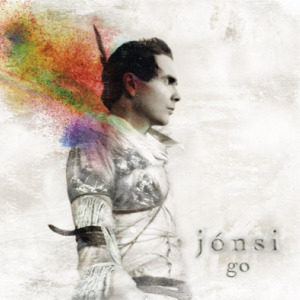
#13. Jonsi - Go

Go, Jonsi's debut album to kickstart his solo artist career, is the album many Sigur Ros fans have been waiting for. Ever since Sigur Ros hinted at more poppy, down-to-earth style changes in 2008, fans have been both anticipating and shuddering at the idea of the grand atmospherics of Sigur Ros being compressed into a 4-minute pop song. A band known for their post-rock song structures, lush orchestration, Icelandic heritage, and lead singer Jonsi Birgisson's angelic falsetto, Sigur Ros took their pieces of music with a calculated seriousness as avant-garde pop experimentalists. In Go, Jonsi Birgisson leaves many of the things behind that kept listeners at arms length (namely the the 9-minute songs, singing in Icelandic, and ambient soundscapes). In what could have been a tragic disaster, Go turns out to be an album of surreal pop songs that are bursting with life and character. What was set out to be a mostly acoustic album, Go is brought to epic hugeness thanks in part to the beautiful orchestral arrangements by Nico Muhly and quirky percussion of Samuli Kosminen. Working together, these simple pop songs become dizzying displays of unbridled excitement and celebration.

The first single and opening track, "Go Do", features Kosminen's animated percussion and Muhly's child-like orchestrations at their very best. Opening with Jonsi's voice processed as bird chips and off-kilter flute notes reminiscent of Muhly's own release, Mothertongue, then erupting later with big bass drums and an explosive chorus, "Go Do" has got to enough quirk to remain refresh and enough catchy melodies to be one of the best pop songs of the year. In Go's slower tracks, most notably "Tornado", Muhly's contemplative arrangements really shine through as Jonsi explores different vocal ranges and breaks up the pace of the four-on-the-floor madness. The songs themselves, here in English for the first time, are playful and simple and translate in ways that surprisingly work in ways that only non-native speakers can pull off. While at times it feels a little overbearing, for the most part, anyone with a heart will give in to Jonsi's insistence that life is exciting and worth living. The reason Go succeeds most, however, is that it reintroduces the world to Jonsi's fascinating voice, which is now on display in choral harmonies, multiple registers, and even chopped up and sampled. We've always wondered what it would sound like to hear Jonsi working in this setting and the results are more exciting and heartwarming then we could have even imagined.

12.16.2010

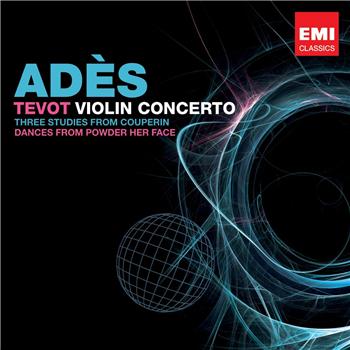
#14. Thomas Ades - Tevot

In many ways, it behooves me to include such a piece on this list. First off, wanting to include pieces of "classical" music on my list may seem a bit both short-sighted and pretentious. If its any indication of the state of classical music, even the idea that such a piece is being "released" in 2010 rather than in 2007 when it was written is reason enough to not want to deal with it. Even more, Tevot can easily be interpreted as a piece of heavy-handed modernism, just the kind of composition that will be a crowd-pleaser for its long, narrative-like structure and absurdly large orchestra requirements. Its that piece that will make classical music enthusiasts feel like they live in better artistic times, when "bigger is better" was still the rule of the land and Richard Strauss was the king. Fortunately, despite these external perceptions, Tevot is an absolutely delightful piece of mastered technique and exciting musical physicality. Thomas Ades has been in the spotlight of high culture for quite some time now as both a conductor and composer, but Tevot certainly feels like a culmination of his musical ideas and practices. The name of the composition refers to the hebrew word for "ark" or "ship", such as Noah's ark. However, in this case, Ades explains the title as referring to the earth as an ark, or a ship, carrying us through a journey of the varying tribulations of the universe. The different aspects of the journey are expressed through number of widely different textural movements. The piece begins with atmospheric brass swelling and chirping string parts written in octaves beyond the stratosphere like a titanic starship moving through fields of sparkling stars. The menacing chromaticism erupts in a variety of different musical textures including an exciting section of rhythmic hits that feel like the Rite of Spring's clumsy grandson, as well as a section towards the end that renders his themes in more contemporary minimalistic techniques.

One of the more surprising features of the piece is the way it encircles the space opera persona almost like a journey from Holst's "The Planets" to "2001: Space Odyssey" and back again. There are even moments when it feels like Ades is even directly expanding and referencing this space opera theme music, utilizing an explicit minor 7th leap that recalls the Star Trek theme music that makes him sound like Thomas Newman's artsy twin brother. At other times, he is unafraid of being utterly tonal and triumphalist in his own terms. In one the best sections of the piece, he brings those extremely high string parts down to earth to reveal their beautifully shifting and hard-to-grasp tonality. Tevot is a colossal piece that must be experienced as a whole and while its hardly revolutionary, it is always incredibly tangible and physical, creating a space opera in itself of a very different kind. While its hard to tell whether Thomas Ades' dissonant/consonant relationships and neoromanticism are moving forward in a new direction or simply updating "The Planets", its hard not to get pulled into his uncanny cultural references and sweeping cosmic grandness. The fact that Tevot manages to successfully communicate despite its overweight traditionalism is a compliment to its author's magnificent vision and the piece's unrelenting richness.


Here's a link to hear an excerpt of the 22-minute musical journey:
http://www.npr.org/player/v2/mediaPlayer.html?action=1&t=1&islist=false&id=131673326&m=126029041

(if the link isn't working, just copy and paste the link into your browser)