That we've made it through my long-winded list of my favorite music releases of 2010, now's your chance to respond. What was your favorite album of 2010/what were you listening to the most last year?
Here's my complete list, along with some honorable mentions that are too good not to respect. So much good music last year!
1. Sufjan Stevens - Age of Adz
2. Arcade Fire - The Suburbs
3. Kanye West - My Beautiful Dark Twisted Fantasy
4. LCD Soundsystem - This is Happening
5. Victoire - Cathedral City
6. Mumford and Sons - Sigh No More
7. Janelle Monae - The ArchAndroid
8. The National - High Violet
9. Nico Muhly - A Good Understanding/I Drink the Air Before Me
10. Vampire Weekend - Contra
11. Trenton Reznor and Atticus Finch - The Social Network OST
12. Local Natives - Gorilla Manor
13. Jonsi - Go
14. Thomas Ades - Tevot
15. Owen Pallett - Heartland
16. Tallest Man on Earth - The Wild Hunt
17. Brooke Fraser - Flags
18. Daft Punk - Tron Legacy OST
19. Yeasayer - Odd Blood
20. Broken Bells - Broken Bells
Honorable Mentions:
: Stars - The Five Ghosts
: John Mark McMillan - The Medicine
: Delorean - Subiza
: Laura Marling - I Speak Because I Can
: Frightened Rabbit - Winter of Mixed Drinks
: Girl Talk - All Day

Showing posts with label best of 2010. Show all posts
Showing posts with label best of 2010. Show all posts
1.12.2011

1.11.2011
#1. Sufjan Stevens - The Age of Adz
 For me, not only is The Age of Adz 2010's best and most important record, it's also a a ubiquitous culmination of Sufjan's work as a multifaceted musician. Hyped in the blogosphere as Sufjan Stevens electronic album, we find Stevens breaking away from the mold of his critically acclaimed style in more ways than just adding synths to the mix and ditching banjos. Since the release of his fan-favorite, Illinois back in 2005, Sufjan had been making some ambiguous comments that were disappointing for fans of his music hoping for a followup to Illinois, including comments about his lack of songwriting inspiration and belief in the "record" system. In one statement, he, like many other artists, questioned the purpose of the length of a normal record when the majority of people purchase music track-by-track and listen to music primarily on shuffle. Just when a followup to Illinois sounded like it would never come, Sufjan unexpectedly released his stunning EP, All Delighted People, and announced the released of his upcoming full-length record. But instead of releasing something that reunited critics and fans-alike with their favorite agreeable indie singer-songwriter, The Age of Adz has split fans and critics across the board with many respected critics unsure even of what to make of it.
 Truthfully though, apart from all the buzz, The Age of Adz isn't a far cry from a lot of Stevens' recent work. Check out the electronics of "Movement IV: Traffic Shock" off of his instrumental work The BQE, or the vocal manipulation/symphonic arrangements in the All Delighted People EP and The Age of Adz is simply the next logical step. Yes, he using drum machines and synths here, but his brand of electronics is uniquely his own. The best example of his new sound is the 8-minute title track that starts with industrial electronic drums and brass hits that slowly transforms into softer gorgeous section of melodious choirs and ends acoustic of all things. Foregoing typical pop structure, the song presents Stevens as a master arranger, songwriter, and composer, wrapping his song around different forms of simple melodic and lyrical motifs. Juggling such a huge overload of sounds and instruments, the album is mixed in such a way that the attention shifts around organically, spotlighting different aspects of the arrangements and sometimes even letting vocals fall into the background (which has plagued a number of people's first listens to the album). However, I found that the more layers of sound I peeled back, the more I realized how deep the songs really go.
But Stevens is doing more here than just adding synths in the mix. In The Age of Adz, Stevens abandons his primary songwriting crutch, the concept album, and replaces it with something intensely personal, somewhat hyperreal, and even emotionally explicit, three things that Stevens has never touched before. Stevens has stated that his work on the instrumental album The BQE "kinda sabotaged the mechanical way of approaching my music, which was basically narrative long-form." In some interviews, he has stated that he desired to write songs that felt physical and satisfying, rather than academically intelligent. But just when you think he is finally writing songs just of themselves, The Age of Adz still finds Stevens referencing things outside himself, most significantly, the schizophrenic artist Royal Robertson. Inspired by the often offensive and perverse art of the self-proclaimed prophet Royal Robertson, Stevens claims to have seen a bit of himself in the man's life. But here is where things get really wacky. We're expected to compare the level-headed art of Sufjan Stevens with the isolation-created art of Robertson? The influences play out in the religious and science fiction intermingling of Robertson in songs like "Get Real Get Right", right alongside the frantic emotional turbulence. But like the popularity of stunt-work mockumentaries this year such as Joaquin Phoenix's I'm Still Here, or Banksy's Exit Through the Gift Shop, Sufjan seems to be writing about himself, someone else, and nobody in particular all at once. In "I Want to Be Well", Stevens confronts the viral infection that he suffered from last year in uncharacteristically vulgar ways while in "Vesuvias", he refers to himself in the third person, giving himself spiritual guidance via a mythical burning volcano. Did Stevens finally crack under all the pressure like fellow surrealists Kanye West and Thom Yorke? Is this really his Kid A? He seems to be okay, but Stevens leaves the truth of the answer behind for the sake of making sincere art that captures real emotions, regardless if they are true of him or not.
A listen through the astounding 25-minute, "Impossible Soul", reveals that Sufjan Stevens is also taking a crack at the way music is listened to in a relevant way. Reconciling his concerns about the nature of music in the digital world, Stevens packs an entire albums worth of music into a single track for the price of one gigantic mp3. Featuring an AutoTune section, all-out dance section, and an acoustic section to end the album, "Impossible Soul" is a monumental closing to a hugely ambitious album that has enough creativity and songwriting strength to stand on its own. Many have left criticism of the album to words like "interesting", "important", or just "strange", all of which are fair and justified. Others claim that ambition has finally got the best of Stevens. But honestly when has Sufjan Stevens ever succeeded in being anything less? The Age of Adz is a messy, but poignant manifestation of everything from culture trends in 2010, to hyperrealism, the state of the music industry, Royal Robertson, and Sufjan Stevens himself.
1.09.2011
#2. Arcade Fire - The Suburbs
 Arcade Fire isn't really into being subtle. Everything from their first two albums, the concepts, the amount of people they put on stage, the soaring vocals, the arrangements, just screamed big. Back in 2004, when their first album Funeral was released, it wasn't exactly the thing to do in the indie world. But after taking the world by storm, Arcade Fire now has a host of clones, admirers in the mainstream (John Legend anybody?), and a pervasive influence in culture that has even made their newest album shoot to #1 in Billboard America. But for all the attention that the album has gotten, I would say that although the conceptual material of The Suburbs is take-on-the-world big in typical Arcade Fire style, the way they go about it is surprisingly not. The Suburbs is 16 pop tracks with incredibly straightforward structures and arrangements compared to the two-part opuses of Funeral or the busy production of Neon Bible. Many of the songs also lack the emotional climaxes in each song that are so familiar to Arcade Fire fans and instead replaces them with an unsettling steadiness that no doubt contributes to the themes of the songs. As frontman Win Butler has stated, the album is "neither a love letter to, nor an indictment of, the suburbs - it's a letter from the suburbs", and fits into that unique scheme pretty consistently.
 As Win and Regine sing about riding bikes down suburban streets, chasing the American dream up the corporate ladder, wasting time, being in punk rock bands, and working meaningless jobs, The Suburbs becomes an incredibly meaningful reflection on what it means to be a generation of people who live and die in the sprawling world of cul-de-sacs and shopping malls. Butler's stories seem to explore a variety of generations' experiences with suburban life from the Don Draper business man in "Modern Man" to a teenager's rebellion and subculture in "Suburban War", and even an old, cynical man's grumblings about technology in "We Used To Wait". The way Arcade Fire translates these stories musically is even more exciting though. By referencing different musical styles, they give each of these songs a setting and even reference particular decades. One of the best examples of this is "City With No Children", a song about living underground in fear of world war where they brilliantly reference classic Springsteen rock. In other parts of the album they do a punk rock song ("Month of May"), a disco-pop song ("Sprawl II"), and even a modern pop-rock song ("Modern Man"). I love the way they use the musical references for more than just nostalgia and instead pull meaning out of the style to compliment their lyrical insights.
Upon my first listening of the album, I thought it lacked variation and was a bit unorganized. But the structure and organization of the record really do play an integral part in the success of the album, which is laid out as two records with four songs on each side. Organized in this way, the flow of the album totally works as the pace picks up toward the end of each record (in "Half Light II" and "Sprawl II"). In some ways, The Suburbs feels like the conceptual antithesis of Funeral. Where Funeral was full of huge communal moments where it felt as if the whole word were singing alongside Butler, in The Suburbs we find those moments replaced with lonely falsettos and hollow reverbs. In terms of consistent songwriting and unparalleled overall success, The Suburbs also picks up where Funeral left off. Resonating with an entire generation trying to understand their suburban upbringing, it is the most complete and consistent conceptual album of the year.
1.08.2011
#3. Kanye West - My Beautiful Dark Twisted Fantasy
 Before for all the hype, the outrageous tweets, the award shows, the hollywood scandal, the talk show appearances, the breakups, the breakdowns, and everything else that makes Kanye West the ridiculously obsessed over popular culture icon that he is today, Kanye was once known for making soul-sampling, perfectly sequenced, orchestral hip hop and having a knack for delivering some of the most memorable lines in rap. However, after Kanye released his breakup Autotune album 808's and Heartbreaks, it seemed as if the culminating work that is My Beautiful Dark Twisted Fantasy might never happen. The slow unveiling of how serious Kanye was about his comeback came in the form of his G.O.O.D. Friday releases, one track a week until the album was released. The effect was a snowballing buildup of hype that exploded in an album with a reputation that proceeded itself. But removed from all that, the truth is that My Beautiful Dark Twisted Fantasy is everything that you've heard it is. It is a masterpiece of conceptual complexity, enveloping the persona of Kanye West and distorting those fragile lines between reality and fantasy.
 Then again, Kanye West's music has always embraced the controversial spiritual battles of the inner soul. The struggle continues here as he triumphantly claims "No one man should have all that power" as his theme song, while also referencing his own suicide in the same song. Touching on fame, sex, lust, glory, relationships, and identity, the themes trace their way through moments of both painfully honest Kanye reality ("Runaway") and bizarre, explicitly vulgar fantasy ("Hell of a Life"), as well as just about everything in between. From the opening fairty-tale monologue that Nicki Minaj delivers with such theatrical perfection to the final political rantings of Gil Scott-Heron, My Beautiful Dark Twisted Fantasy is a perfectly crafted album that is made to be heard front to back. As the album pushes forward to its climax, a fantasy story about being cheated on in "All of the Lights" becomes a reality in "Blame Game", Kanye rapping "Stick around and some feelings might surface". The heartfelt breakup song is then interrupted by a completely inappropriate monologue by Chris Rock, almost like Kanye letting his Twitter-esque, stream-of-thought consciousness blur the line of what's real and what's not. By the time you arrive in the middle of an urbanized version of Bon Iver's "Woods" sample from a song called "Lost in the World", as vocalists shout "Run from the light!/Run from the night!/Run for your life!", you won't be sure if you've arrived at Kanye's hyperrealist redemption or his final demise. In the end, it doesn't really matter though, because you won't be able to keep from applauding at his relentless work ethic and creativity in what is most certainly the album he was made to make. In My Beautiful Dark Twisted Fantasy, Kanye West places himself at the top of the artistic and pop culture world, proving that he can use his dark, twisted, persona to create something that transcends even his own fantasies.
1.06.2011
#4. LCD Soundsystem - This is Happening
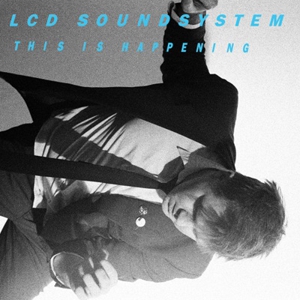 James Murphy is somewhat an odd indie music hero. After breaking into the hipster world with their debunking of "hip" in "Losing My Edge", LCD Soundsystem's tongue-in-cheek, beyond-cool image has somehow allowed it to be appropriate for a middle-aged man to be singing in a screechy falsetto or shouting about drunk girls. Adding another level of curiosity to the music, Murphy is constantly claiming that people take their music too seriously in interviews as if he really is just an old dude wanting to make fun dance music for kids. And that is certainly a way to interpret the music of Murphy. But then you'll get to a song that has the emotional weight of a lifetime of regret and doubt like "Can Change" and "All I Want". And although this is indeed Murphy at his most intimate and personal album yet, he never forfeits his artistic ambitions for the cause of sentimentality. The forty-year old producer/singer has a strange affinity for punk and disco that is unlike other nostalgia-driven bands in that he is actually old enough to have lived through both of those eras. Because of that, Murphy's brand of electronics is a bit more raw then the typical techno/disco band and his gut instinct a bit more confident.
 If you've heard previous LCD Soundsystem releases, you'll know that he isn't afraid to prolong track over 7 or 8 minutes, infamously stating, "I like things that do one thing and do it well." In This is Happening, most of the tracks last over 7 minutes, recreating the manipulation of desire and release like a tried and true disco track. No song does it better than "One Touch", funk-disco masterpiece about satisfaction and desire that begins with a slowly chromatically rising synth bleep that never quite resolves. In fact, the hyped up single, "Drunk Girls", is a bit of a misnomer in the context of the album, but also acts as a great balancing song that delivers some of Murphy's best double meaning lyrics in the form of a The Velvet Underground-inspired song. Fortunately, this time around Murphy's focus seems to be on writing some of his catchiest and melody-driven music yet. Even the typical funky fare of "Pow Pow" eventually arrives at a soaring melody. Its hard to know whether or not there is a track here will be as musically and culturally significant as "All My Friends" from the Sound of Silver album, but its safe to say that if this truly is Murphy's last LCD Soundsystem album it would be a perfectly suitable album to bow out on.
And here, what might be my favorite music video of the year, the Spike Jonze's directed, "Drunk Girls":
1.05.2011
#5. Victoire - Cathedral City
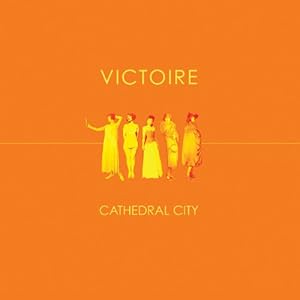 When people say that the classical music genre in itself is dead, my first reaction would be to point to thriving classical composers such as Nico Muhly and Missy Mazzoli, who are doing what the great Western tradition of classical composers has always done: making complex pieces of art that comment on life and society in the form of musical language. Then again, what makes such composers relevant is their dialogue with popular music that is more apparent then ever in the debut album from Victoire. After all, its hard to say if in the future they will be seen as a "quintet" or as just a straight up indie band. Led by composer and keyboardist Missy Mazzoli, the group mixes pseudo-classical minimalist instrumental music and experimental indie-pop. Victoire includes an all-star performing lineup that include a clarinetist, two keyboardists, a violinist, and a bassist with Missy Mazzoli leading the charge. Each of the songs on their debut full-length album are contemplative and mysterious pieces of music that reflect on modern life's moments in sometimes sweet and sometimes tense ways.
 Mazzoli certainly speaks the language of pop music, but with it she says things that aren't quite typical of the pop world. In the song "I Am Coming For My Things", Victoire uses samples of speech to add another ingredient of intrigue to their complex musical creations. Is the piece about materialism and desire? Is it about homelessness and emotional apathy? While Mazzoli is often ambiguous thematically in her pieces, the music certainly encourages the listener to soak it in rather than to dissect it. Victoire seems to like to focus on and repeat small moments of harmonic and rhythmic musical shifts, producing the effect of a composer exploring discrete moments of time and emotion. In one of my favorite pieces off the album, "Like a Miracle", Victoire plays buzzing electronics and eery violin lines behind a modified voice as if it is diving into the exploration of a single spoken syllable frozen in time. Its astounding that productions of postmodernity such as Cathedral City can produce such dark, unsettling, and daring music using such simple harmonic language. Its a true testament to the careful and meticulous hands of Missy Mizzoli, the delicate performance of Victoire, and their willingness to be equally comfortable playing in both clubs and concert stages. For me, Cathedral City not only was the best instrumental album and debut album of 2010, but it is also in an incredibly hopeful direction for the future of classical music that is as intrinsically relevant as it is profound.
1.04.2011
#6. Mumford and Sons - Sigh No More
 The phenomenon that is Mumford and Sons is almost unexplainably strange. How did this brand new, pseudo-folk English band without even a drummer become one of the primary alternative rock acts in the mainstream United States music scene in a matter of a few months? Maybe its that Mumford and Sons have one of the most tantalizing and energetic live shows around that is instantly fan-winning. Or maybe its that with the recent successes of indie crossover bands like Kings of Leon, The Black Keys, and Phoenix have had in the mainstream, the radios are willing to market anyone with flannel shirts, acoustic guitars, and a danceable beat. Either way, Sigh No More, their debut release that came out in the UK in 2009 and in the US in early 2010, has gone from the folk-revivalist communities of London to sweep across mainstream America. What's crazy about Mumford and Sons is that it features some of the best rock anthems of the year and it would be a stretch to actually call them a rock band at all. Although they're made up of four acoustic multi-instrumentalists, a kick drum, and a tambourine, they somehow manage to fill up a space big enough for a rock stadium.
The grace and subtlety of similar bands like The Avett Brothers is all but absent here, but is replaced with an utter lack of restrain, making their frenetic banjo playing and drumming instantly accessible and satisfying. Mumford and Sons let it all hang out in self-effacing love songs like "Little Lion Man" and "The Cave" that are fueled with so much emotion and reckless abandon that stomping on a kick drum seems like the only sensible thing to do. Surprisingly, Sigh No More is also a delightfully spiritual and optimistic album that reaches for the stars and ends up in the middle of a forest of faith, doubt, God, and love. The lyrics are simple, but full of heart and honesty, just like the music that accompanies it. Especially on quieter songs such as "Timshel", where lead singer Marcus Mumford is given some space and a backing of angelic harmonies, we sit atop the canopy with Mumford and sigh no more. If you're looking for an authentic folk album, this probably isn't it. But the good part is that Mumford and Sons don't pretend to be something they're not. Sigh No More is a glowing pop/rock album that is a great example of a music that throws logic and sensibility out and instead embraces what feels good.
1.02.2011
#7. Janelle Monae - The ArchAndroid
 Everything from the album's kooky, science fiction concept, to Monae's respectable eclecticism and undeniable charm just rings fresh. The album, which is actually two albums put together (identified as Suite II and Suite III), is part of Monae's bizarre concept based on the black and white science fiction classic, Metropolis, where she is a messianic ArchAndroid, held down by the nature of her robotic identity. The reference appears a little random and irrelevant at first, but when Monae uses the metaphor to represent the racial struggles of African-Americans and makes musical reference to musical heroes from R&B's past, the imagery becomes profoundly effective. Following the orchestral Overture opener, Suite II begins with three quirky, upbeat R&B wonders that seamlessly blend indie pop, modern hip hop, and nostalgic R&B/soul styles to create a brilliant piece of retro afrofuturism that is at times thoughtful and engaging, but always fun and light-hearted. Monae's theatrical and artistic background shines in a way that is novel while still avoiding the conceptual trappings that would keep the album from feeling like it is trying too hard.
 Whether she is referencing Music of My Mind-era Stevie Wonder in "Locked Inside" or switching between swirling indie pop and R&B choruses in "Oh, Maker", her vocal acrobatics and consistent songwriting keeps the genre-flipping feel like a natural outflow of her glowing personality. Each song explores different aspects of Monae's masterful vocal talents and studious musical knowledge that encompasses Prince, Michael Jackson, Stevie Wonder, old spy movie soundtracks, and her own brand of vocal quirkiness (see "Wondaland"). And then there is "Tightrope", a single so well constructed that it proves that Monae can translate her unique musical vision and voice into something instantly accessible and catchy as well. Janelle Monae's The ArchAndroid is hard to define and tie down, but still manages to be fun; an instant a classic in this way and a great reminder that there is incredibly exciting music to be made if we continue to make room for unique artists like Monae to exist.
12.30.2010
#8. The National - High Violet
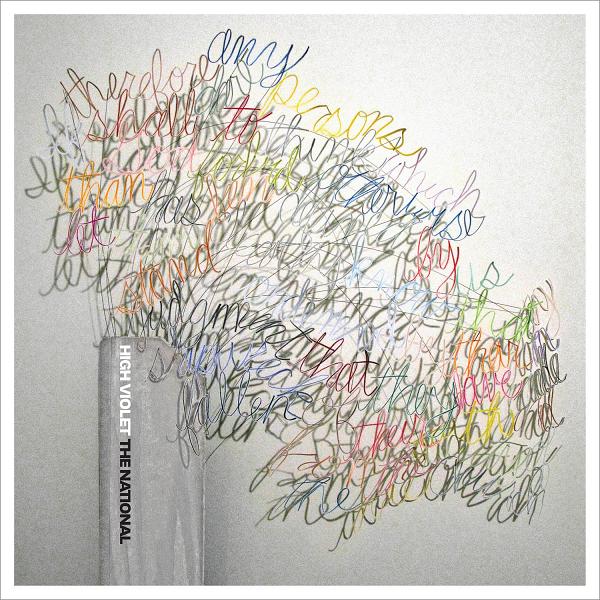 Although The National has always been a bit too serious to make it big in the pop world and a bit too simple to create any big splashes in the post-rock world, these guys have been patiently creating dark and brooding rock for years now. And although it would be easy to write off High Violet as more of the same, it might just be The National's best release yet. Backed by one of the most solid rhythm sections around, the songwriting force that is Matt Berninger and Aaron Dressner truly shines in High Violet. Matt Berninger, the lead vocalist, narrates us through eleven heartbreakingly ordinary stories that resonate with the economically recessed, socially estranged, and depression pill-addicted generations of lowbrow America. Although The National isn't into making preachy political statements or delivering social commentaries, their emotional profile snapshots paint a particularly bleak depiction of modern life. Dressner's heroes range from paranoid fathers ("Afraid of Everyone") to high school runaways ("Anyone's Ghost") and doomed lovers ("Runaway"), presenting them just as they are without ever looking down on them. In other words, when Dressner mutters "Sorrow found me when I was young/Sorrow waited, sorrow won", seemingly under his breathe, you'd better believe he means it; there isn't an ounce of insincerity in this guy's bones. And just as The National seeks to capture these unique moments of emotion and honesty in words, they also match their themes with seemingly ordinary, but daringly unique moments of music as well.
 Although their traditional 5-piece lineup is down-to-earth and honest, they manage to make some pretty unusual sounds feel like home as well. The opening track, "Terrible Love", begins with electric guitar distortions and feedback that are just the right amount lo-fi and just the right amount triumphant rock. Later on, in instant classics like "Bloodbuzz Ohio", Bryan Devendorf's upbeat drumming contrasts with the monotonous rumblings of Berninger, like memories of the past trying to conjure up emotions out of an aging man. It is refreshing to hear a band that isn't obsessed with trying to reinvent itself all the time, but instead comfortable with who they are. Like they have successfully done in the past three albums, The National continues to be the under-appreciated serious rock band that they always have been, successfully capturing the provocative moments of modern life, in all their deep emotion and complexity.
12.22.2010
#10. Vampire Weekend - Contra
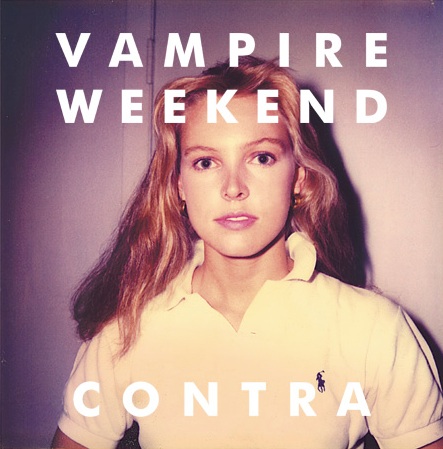 With every self-righteous bone inside of me, I wanted to dislike Contra. I went through the same thing when I first heard their debut album a couple years ago. Sure, the first album was a good listen, but I had decided it was just a passing fad; a mere distraction from the deeper, more convoluted experiences that lay in albums by Fleet Foxes, Kanye West, and TV on the Radio from that year. To my dismay, it turns out Vampire Weekend is almost just as likable in 2010 as it was in 2007 and Contra, if nothing else, is simply the most charming album of the year. It only took hearing the vocal modification, rattling percussion, and eloquent string passages of "California English" to realize that Contra was both a continuation and a fulfillment of something Vampire Weekend had begun in their first record. Contra covers much of the same ground Vampire Weekend fans would want, whether its the bubbling electronics of "White Sky", the world beats of "Horchata", or even the more ska-flavored "Cousins", many of the songs recall familiar eccentricities, but feel twice as strong here. In the particularly easygoing hit, "White Sky", Ezra Koenig shows off some impressive wordplay in the setting of a stroll down a Manhattan block that makes his attempts in their debut album look childish. Yes, Vampire Weekend is still the same light-hearted, polo-wearing band they've always been. Fortunately though, Vampire Weekend takes some necessary steps forward as well, even venturing into taking in some different influences and more serious themes. The indie electro-pop influenced, "Giving Up the Gun", which seems to about making peaceful lifestyle changes, became the single of 2010 for many a hipster this summer and for good reason. Vampire Weekend makes glowing little eclectic pop gems like "Giving Up the Gun" seem effortless.
 Koenig has stated in multiple interviews that many of the lyrics in Contra speak of what he calls "first-world guilt", attempting to understand living in privilege and the guilt that comes with it. Although you could easily get through the album multiple times without thinking about such things, it is certainly nice to hear Koenig's understated thoughts on more emotionally potent songs like "Taxi Cab" and "I Think Ur a Contra". They still claim that people take them more serious than they take themselves though. In Contra, they persist, continuing to be difficult to pin down, slyly existing between genres and subgenres, and pretending to not have much to say. Following a lawsuit with the $2 million lawsuit with the former-model who is featured on the Contra cover, this attitude is more refreshing a stance than ever. Then again, that's always been what Vampire Weekend has been about all along: putting down the guns and tearing down the walls that separate people unnecessarily for the sake of just having a good time. Again, they make it look effortless.
12.21.2010
#11. Trent Reznor and Atticus Ross - The Social Network OST
 The recent trend in the film industry is to hand over the reigns of film scores to pop stars and record producers to produce something original rather than just shoe-in previously recorded material. Whether its accessible (see Daft Punk's Tron: Legacy OST this year), straight up bizarre (see Animal Collective's Oddsac film "score"), or cinematically stunning (see Johnny Greenwood's There Will Be Blood film score), the results are always out of the ordinary. This year, what is being hailed by many as the best film of the year, David Fincher's The Social Network, also features the best soundtrack of the year with music by Nine Inch Nails rock-veteran Trent Reznor and record producer Atticus Finch. The early official trailers that featured cover of Radiohead's "Creep", sung by a choir and another that featured Kanye West's "Power", seemed like almost too perfect of fits to be true, but we ended up with is something far more ethereal and ominous. In so many ways, Trent Reznor and David Fincher are both two sides of the same coin and seemingly unlikely contributors to a film about the dramatization of the creation of Facebok. From Fincher claiming it to be a John Hughes-style melodrama to what the early overwrought trailers were showing, it was difficult to see what the director who is known for exploring the dark and psychological side of humanity in films like Fight Club would be doing with such a film. Meanwhile, in seeking music for the film, Fincher found something of a kindred spirit in the dark-ambient, instrumental Nine Inch Nails album, Ghosts, and before too long, Reznor and Ross would be creating the soundscapes behind which Mark Zuckerberg would exist.
 Reviewing standalone film scores can be quite difficult at times because it is always the sign of a great film score when it is difficult to stand on its own, divorced from the film itself. In the same way that Fincher himself turned the unlikely story into something raw and relevant, Reznor's ominous textures and dubstep synths are so caught up in the characters and motifs of The Social Network that they turn a social networking website into a futuristic techno world where Mark Zuckerburg is the computer hacker hero of a cyberpunk tale of corporate greed, vengeance, and betrayal. What Reznor and Ross do is revolutionary in that they provide a space and context for the masterful script by Aaron Sorkin and the excellent performances of the cast to interact and say a lot of meaningful things about communication, technology, and friendship in the 21st century without ever saying them at all. In the first track, "Hands Cover Bruise", the innocent piano twinkles that begin the film is slowly choked and washed out by buzzing electronics and hysteric distortion that sounds like Death Cab for Cutie trying to wrestle over the Joker theme from the Dark Knight that is slowly taking over. Its hard not to imagine the piano themes that are threaded throughout the soundtrack as representing Zuckerburg who becomes both overwhelmed by his rise to fame while also remaining somewhat unchanged throughout. The tracks that follow range from upbeat electronic dance tracks that demand attention ("In Motion") and tastefully tense atmospheric tracks ("3:14 Every Night") that quietly stand in the background. And let's not forget the already infamous inclusion of an insanely schizophrenic version of "In the Hall of the Mountain King" that accompanies a particularly zany scene of the film. The film would a much different film if these guys were not involved and we should all be thankful for that. In conjuction with the film, Trent Reznor and Atticus Ross have created a film score that has sold me on two things that were never portrayed so convincingly. One, that the true "21st century schizo man" is not Kanye West, but instead Mark Zuckerberg. And two, that we are an entire generation of people singing the lyrics of "Creep".
Here is "Hands Cover Bruise":
And because its too good not to see:
12.19.2010
#12. Local Natives - Gorilla Manor
 Its hard to explain Gorilla Manor, my pick for #12, without referencing some of indie pop's biggest other names: Grizzly Bear, Arcade Fire, and Fleet Foxes. However, in all honesty, the Local Natives' debut album doesn't sound much like any of those bands. Sure, there are plenty of three part harmonies with hefty amounts of reverb, coexisting folk and rock styles, and wordless singalong choruses, all of which have become iconic of the indie rock genre. But Local Natives inject a boost of youthful energy and rock sensibility into the music that makes the previously mentioned bands sound like aging middle-aged men. The scraggly percussion of rim shots and tom beats running constant through each of the songs provides even the slower tracks with a shot of afropop adrenaline. The band is lead by three singers, Taylor Rice, Ryan Hahn, and Kelcey Ayer, who each have strong and mature voices, lending some well-needed confidence and variation to the indie rock "frontman" lineup. You won't hear any of the shaky, self-conscious influences of Conor Oberst here. In fact, the band feels confident and cohesive as a whole as well, seemingly comfortable with each other's strengths and collaborating like a band with at least twice their history. The album title, Gorilla Manor, comes from the name of their house/studio that the band and their friends lived and recorded in, so its no wonder the band feels so at home with each other. The other reason why the band feels so unified is that before Local Natives emerged in the indie scene as one of 2010's "best new artists", they were known as Cavil at Rest with the same lineup and a slightly more generic alternative pop rock sound. In other words, these guys have been around for a little while and the reason why their musical characteristics seem so conveniently trendy is because their new image and style was intentionally decided upon. Knowing this, it would be easy to pass off their new style as a superficial and "seeker-friendly". Fortunately, the band's energetic spirit and infectious hooks keep it from ever feeling like a cash-in.
 In their first single that became the definitive template for their new sound, "Sun Hands", the Natives balance worldly beats, spiritually earthy lyrics, and just enough yelling, chanting, and aggressive percussion to keep things interesting. Local Natives prove they can tug the heartstrings and write slower, more meaningful songs as well. In what might be the most well-written song on the album, "Who Knows Who Cares", the boys spin a tale of youthful heartbreak, doubt, and reckless abandon amongst a sea of swirling harmonies and bluesy guitar licks. The melody that is thread through the song is strong enough to carry the weight of the entire song, finally exploding at the end, sung in a group of euphoric voices. It were these melodies and harmonies that kept me returning to this album again and again throughout the year show that there is more to these guys than mustaches and conveniently labeled "indie" music characteristics.
12.17.2010
#13. Jonsi - Go
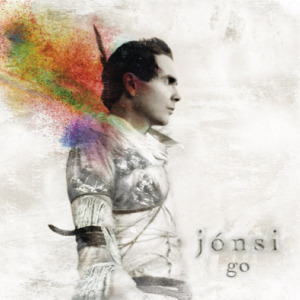 Go, Jonsi's debut album to kickstart his solo artist career, is the album many Sigur Ros fans have been waiting for. Ever since Sigur Ros hinted at more poppy, down-to-earth style changes in 2008, fans have been both anticipating and shuddering at the idea of the grand atmospherics of Sigur Ros being compressed into a 4-minute pop song. A band known for their post-rock song structures, lush orchestration, Icelandic heritage, and lead singer Jonsi Birgisson's angelic falsetto, Sigur Ros took their pieces of music with a calculated seriousness as avant-garde pop experimentalists. In Go, Jonsi Birgisson leaves many of the things behind that kept listeners at arms length (namely the the 9-minute songs, singing in Icelandic, and ambient soundscapes). In what could have been a tragic disaster, Go turns out to be an album of surreal pop songs that are bursting with life and character. What was set out to be a mostly acoustic album, Go is brought to epic hugeness thanks in part to the beautiful orchestral arrangements by Nico Muhly and quirky percussion of Samuli Kosminen. Working together, these simple pop songs become dizzying displays of unbridled excitement and celebration.
 The first single and opening track, "Go Do", features Kosminen's animated percussion and Muhly's child-like orchestrations at their very best. Opening with Jonsi's voice processed as bird chips and off-kilter flute notes reminiscent of Muhly's own release, Mothertongue, then erupting later with big bass drums and an explosive chorus, "Go Do" has got to enough quirk to remain refresh and enough catchy melodies to be one of the best pop songs of the year. In Go's slower tracks, most notably "Tornado", Muhly's contemplative arrangements really shine through as Jonsi explores different vocal ranges and breaks up the pace of the four-on-the-floor madness. The songs themselves, here in English for the first time, are playful and simple and translate in ways that surprisingly work in ways that only non-native speakers can pull off. While at times it feels a little overbearing, for the most part, anyone with a heart will give in to Jonsi's insistence that life is exciting and worth living. The reason Go succeeds most, however, is that it reintroduces the world to Jonsi's fascinating voice, which is now on display in choral harmonies, multiple registers, and even chopped up and sampled. We've always wondered what it would sound like to hear Jonsi working in this setting and the results are more exciting and heartwarming then we could have even imagined.
12.16.2010
#14. Thomas Ades - Tevot
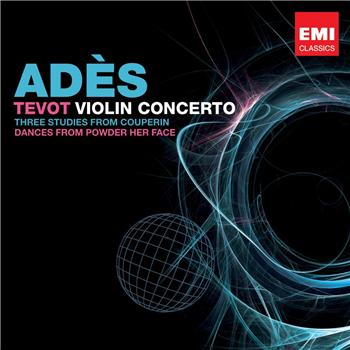 In many ways, it behooves me to include such a piece on this list. First off, wanting to include pieces of "classical" music on my list may seem a bit both short-sighted and pretentious. If its any indication of the state of classical music, even the idea that such a piece is being "released" in 2010 rather than in 2007 when it was written is reason enough to not want to deal with it. Even more, Tevot can easily be interpreted as a piece of heavy-handed modernism, just the kind of composition that will be a crowd-pleaser for its long, narrative-like structure and absurdly large orchestra requirements. Its that piece that will make classical music enthusiasts feel like they live in better artistic times, when "bigger is better" was still the rule of the land and Richard Strauss was the king. Fortunately, despite these external perceptions, Tevot is an absolutely delightful piece of mastered technique and exciting musical physicality. Thomas Ades has been in the spotlight of high culture for quite some time now as both a conductor and composer, but Tevot certainly feels like a culmination of his musical ideas and practices. The name of the composition refers to the hebrew word for "ark" or "ship", such as Noah's ark. However, in this case, Ades explains the title as referring to the earth as an ark, or a ship, carrying us through a journey of the varying tribulations of the universe. The different aspects of the journey are expressed through number of widely different textural movements. The piece begins with atmospheric brass swelling and chirping string parts written in octaves beyond the stratosphere like a titanic starship moving through fields of sparkling stars. The menacing chromaticism erupts in a variety of different musical textures including an exciting section of rhythmic hits that feel like the Rite of Spring's clumsy grandson, as well as a section towards the end that renders his themes in more contemporary minimalistic techniques.
One of the more surprising features of the piece is the way it encircles the space opera persona almost like a journey from Holst's "The Planets" to "2001: Space Odyssey" and back again. There are even moments when it feels like Ades is even directly expanding and referencing this space opera theme music, utilizing an explicit minor 7th leap that recalls the Star Trek theme music that makes him sound like Thomas Newman's artsy twin brother. At other times, he is unafraid of being utterly tonal and triumphalist in his own terms. In one the best sections of the piece, he brings those extremely high string parts down to earth to reveal their beautifully shifting and hard-to-grasp tonality. Tevot is a colossal piece that must be experienced as a whole and while its hardly revolutionary, it is always incredibly tangible and physical, creating a space opera in itself of a very different kind. While its hard to tell whether Thomas Ades' dissonant/consonant relationships and neoromanticism are moving forward in a new direction or simply updating "The Planets", its hard not to get pulled into his uncanny cultural references and sweeping cosmic grandness. The fact that Tevot manages to successfully communicate despite its overweight traditionalism is a compliment to its author's magnificent vision and the piece's unrelenting richness.
Here's a link to hear an excerpt of the 22-minute musical journey:
http://www.npr.org/player/v2/mediaPlayer.html?action=1&t=1&islist=false&id=131673326&m=126029041
(if the link isn't working, just copy and paste the link into your browser)
12.14.2010
#15. Owen Pallett - Heartland
 For all the talk and theory behind postmodernism and the breaking of the walls between classical and popular music, there are many less artists actually creating music under its framework. Owen Pallett, however, is one of those artists, and his third LP, Heartland, is a visionary album with a convincing position on the issue. Having received a bachelor's degree in music composition, Pallett went on to start a solo career with just his violin and a loop pedal, while also collaborating with some of the indie's biggest bands to fund it. Writing orchestral arrangements for bands like Grizzly Bear, The Mountain Goats, and Arcade Fire, he has become the working craftsman of the indie world. Indeed, on Heartland, Pallett's boldest and most mature artistic statement, he trashes the idea that one needs anything less than the Czech Philharmonic to create sincere and effecting pop. And while this is certainly pop, Owen Pallett is writing some of the most sophisticated and complex tunes out there, not shying away from chords and compositional techniques he no doubt learned from both listening to musicals and attending theory classes at music school. Opening with the blaring organs and off-kilter percussion of "Midnight Directives", Pallett shows off how exciting and unexpected this kind of genre-crossing can be. While his vocal quality seems tamed and trained, Pallett's arrangements are theatrical and bombastic, sounding like a odd mix between Stephen Sondheim's Sweeney Todd soundtrack and Joanna Newsom's Ys.
 What makes Heartland especially significant though, is how Pallett's orchestration is so fundamental to its composition, rather than ornamental (like most music that is labeled symphonic or chamber pop). In songs like "Keep the Dog Quiet" and "Oh Heartland, Up Yours!", plucked strings and orchestral woodwinds happily take the place of guitars, with Pallett cooing agreeable melodies of doubt and faith over the top. In "Lewis Takes off His Shirt", Pallett effortlessly combines orchestral elements with bubbly synthesizers and electronic drums, building a sound that is incredibly unique and forward-looking. Owen, along with a few others (such as Nico Muhly and Sufjan Stevens), lives as a diplomat that is willing to shake hands on both sides of the classical-pop music aisle, while also existing in a kind of world of his own. This is not to imply that his music is easily accepted on either side of the spectrum, but instead that it is in the business of messy reconciliation between the musical forces. And fortunately for us, for all the big ideas behind the music, Heartland never feels stuffy or academic. This is Owen Pallett at both his sharpest and most accessible, bursting with ideas and creativity, and boldly opening up doors that pop musicians have been knocking on for years.
12.12.2010
#16. The Tallest Man on Earth - The Wild Hunt
 In the same way that camera work plays such an important role in films, how an album is produced plays a crucial role in how recorded music is perceived. No camera angle, production choice, or vocal texture is ever neutral or accidental. When approaching a work like The Wild Hunt, you'll hear few people talk about the production of such an album, but I promise that you will forget you are listening to an acoustic album by the time you get through the opening track because of it. After all, its easy to write off Kristian Matsson's blatant Dylanisms and simplistic folk songs as cashing in on pop culture's deification of Bob Dylan or recent folk trends in indie music. But there is something so majestic about the minimal production and honest songwriting of The Wild Hunt, that it seems to transcend its role as mere imitation. You won't mind that a few plucks on a banjo and some foot taps are the only non-acoustic guitar instruments on the album. Instead you'll hear the cracking and clipping of Kristian Matsson's crooning vocals; the smoothness of his eloquent guitar playing contrasting with the cracking harshness of his vocals; the consistent vocal qualities against the ever-changing guitar textures of each song. Strangely enough, the one musical anomaly of the album, the piano-led "Kids on the Run", will have you glad that Matsson keeps his style and production choices the way they are for most of the album.
 Although The Wild Hunt isn't too different stylistically than anything else Matsson has released, it finds Matsson developing as an artist and songwriter it just the ways you'd hope. The Tallest Man on Earth's take on folk is more modern thematically than you think at first, its lyrics resembling a mix between Fleet Foxes and Robert Frost rather than anything Dylan wrote. In an interview with Face Culture, Matsson states that despite his obvious influences, he never intended to write his music in any particular tradition. In fact, while being transparent about his influences, he also never tries to hide his European origins. In the title track, Matsson recalls the ancient European folk myth of the same name, using its imagery to talk about living a hopeful life knowing death is at the end of it. Finding introspection and meaning in pastoral settings and folk mythologies, Matsson discovers something convincingly authoritative and ancient about 'folk' because of his complete capture of the poetic language. His interesting word choice and phrasing can sometimes be strange, but is always refreshing and bold: successfully avoiding the songwriting cliques that are so prevalent in pop music today. Ultimately though, Kristian Matsson continues to be incredibly successful because he's not shy about where his musical influences come from, but is also persistent on making the sound his own. Although very different, The Wild Hunt is one of the best folk-revivalist album since Fleet Foxes' self-titled release in 2008, and that's definitely saying a lot.
12.09.2010
#17. Brooke Fraser - Flags
 The CCM Industry has been undergoing some tough times as of late. The generation that grew up listening to only that which played through the CD samplers of Christian Supply seems to have subconsciously become aware that the Christian music industry is neither more honest or more holy than its secular counterparts: only less original. Amidst the rubble of a kind of music that was created on being 'safe', a few voices have risen from within the industry that have reclaimed the artistic and risk-taking vision of the independent music scene for themselves (see Jon Foreman, John Mark McMillan, and Derek Webb). Brooke Fraser, the songwriting and vocal force behind Hillsong United, has had a quiet but substantial solo career that has culminated with the 2010 release, Flags, her most consistent and mature album yet. Make no mistake; this is straight-up pop/rock at its simplest and most concise. But under the command of Fraser's tested vocal quality and smart writing, its hard to be cynical. Opening with the joyously carefree, "Something in the Water", Fraser shows off a more organic and folk-oriented sound that manages to sound fresh and current, while still being incredibly accessible. What Flags does that so many singer-songwriter albums fail to do is capture a sound that doesn't feel contrived or disconnected from the songwriting. One of the primary reason that Flags succeeds in this respect is that this is the first album that Fraser actually produced herself: and the results really do pay off. Whether she is experimenting with folk-country in "Coachella" or Vampire Weekend antics in "Jack Kerouac", her keen sense of melodic lyricism and pop threads through each song, shining with understated confidence. At the end of Crows & Locusts, we even hear Christian music folding in on itself with Fraser using the words of a popular worship song to talk about the hardships of famine and growth. And even so, you can't help but wonder if she doesn't see a little of herself when she sings about a girl who "Feels her sweat in the ground and the burn in her nose/And the knowing in her guts/Something's still gonna grow/She ain't leaving till it does". Triple credited in this album as the vocalist, songwriter, and producer, Brooke Fraser has toiled her artistic vision and created a very personal, labor of love. Even more, Flags points to exciting directions for new movements in Christianity-informed music: here, a refreshing breathe of bold honesty and self-expression.
 12.08.2010
#18. Daft Punk - Tron: Legacy OST
 One can't help but ask the question: if given the chance, what would two robots compose for an orchestra? There is something just really exciting (and nerdy) about the idea of an electro-pop band like Daft Punk being handed the reins of a 90-piece orchestra and a musical concept as colossal as creating a score for a 3D, visual-oriented film to me. Although this is definitely Daft Punk at its darkest and least funky, its also unmistakably the product of the masked, electro-pop duo we all know and love. What you end up with is high-octane repetition, played out in fuzzy synths and tense, frenetic string passages. But then again, isn't that the same winning aesthetic that Hanz Zimmer has been using throughout his career of scoring Hollywood action blockbusters? There's no doubt Daft Punk didn't learn a thing or two from Mr. Zimmer and other film score specialists with their use of deep brass swells and distorted bass hits. Tracks like "Outlands" and "Rectifier", which lack electronics of any kind, sound like they could have easily been cropped from an action scene from "The Dark Knight", or any number of other films by Jerry Bruckheimer or Christopher Nolan. In fact, to my pleasant surprise, Daft Punk flexes some impressive orchestral compositional muscles, most notably in the slower-moving dramatic, track "Adagio for TRON". Its no surprise, however, that the most exciting tracks such as "The Game Has Changed" and "Derezzed", build they're kinetic energy off club-ready dance beats and catchy video game synth hooks. Daft Punk hinges 8-bit video game soundtracks, classic cinematic tension, and techno-pop upon a foundation of unrelenting minimalism.
Rather than creating any memorable themes or motifs in typical Hollywood fashion, most of the tracks highlight short 8-note rhythmic patterns that repeats on either strings or a synth throughout the entire track in the same way Daft Punk did in so many of their tracks off of Discovery and Human After All (and was even criticized for). Daft Punk themselves, compare their work combining symphonies and synths here to their contrasting of metal and disco in Discovery, and it is for sure every bit as successful. The Tron: Legacy score is an example of a true feedback loop; the culture of minimalism so intertwined within itself that trying to figure out where Daft Punk is getting inspired from is nearly impossible. While the film itself seeks to reveal the similarities between the computer world and the real world, Daft Punk's ambitious film score reveals how similar the worlds of Daft Punk, Hanz Zimmer, video games, and Steve Reich truly are.
12.07.2010
#19. Yeasayer - Odd Blood
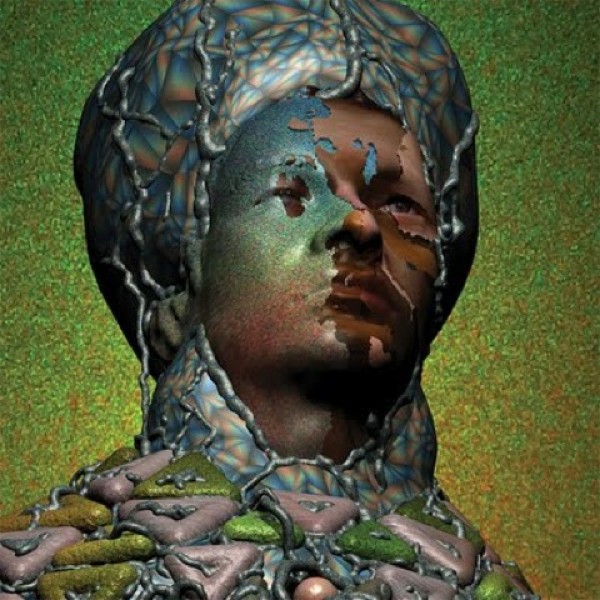 When I first heard Yeasayer's Odd Blood early this year, I felt a certain amount of bittersweetness toward the album. At the time of the eclectic band's freshmen release, All Hour Cymbals, they liked to describe their sound as "Middle Eastern-psych-snap-gospel", which might sound a little ridiculous, but they rightfully earned every one of those titles. All Hour Cymbals had this haunting, apocalyptic feel to it, with hits like "2080" and "Sunrise", acting as strange paranoidal visions of the future, guided by Talking Heads psychedelics and Keating's unsettling vocal qualities. In Yeasayer's newest release though, the band has chosen to assimilate indie's love affair with 80's nostalgia into their bag of tricks. In songs like "Love Me Girl" and "Madder Red", Yeasayer recalls disco and David Bowie with its own take on bubbly baselines and reverb-laden snare hits. Inspired by an LSD trip in New Zealand and reportedly "attempting to challenge R&B's hold on dance music", Yeasayer has taken influence from a much more pop-centered source this time around. The result is a sound which is as successful in its dance floor-readiness as it is thoughtful in experimentation. The best example might be their single "O.N.E.", which features huge disco beats mixed with African rhythms, is a seamless and joyous melting pot of styles and genres all wrapped up in a rays of sunny pop pleasure. And even so, I'll admit it was a bit off-putting to hear a band replace its more unique and organic sound with production-heavy dance tracks at first. But upon closer listening, you'll hear a lot of the same elements things that made All Hour Cymbals so compelling and bizarre still very much intact. Many of the songs are simply all over the spectrum lyrically and musically, bring their wonky eclecticism to a whole new level. And besides, when a band's "new sound" is as infectious and imaginative as songs like "O.N.E." and "Ambling Alp", you can't help but recognize Yeasayer' Odd Blood as an example of a band taking bold, successful steps forward. It's always a good sign when you can't help but wonder where a band will take their sound next.
12.06.2010
#20. Broken Bells - Broken Bells
 For all the hype that had been built up around the idea of Broken Bells, their self-titled first release sounds very much like what you'd expect. James Mercer, the front man behind the indie pop miracle band The Shins, has teamed up with the trip hop, entrepreneurial producer and musician Danger Mouse (responsible for acts such as Gnarls Barkley and The Gorillaz). Even by the first the time the rumors of their collaboration broke out, they were destined to be the indie scene's "next big thing"; 2010's version of The Postal Service. And in many ways, Broken Bells offers some of the very same motivators and claims to fame that Ben Gibbard's indie-gone-eletronica band did back in 2003: hearing everyone's favorite indie songwriter recontextualized. But rather than utilizing these more rigid models of genre-crossing, Broken Bells finds more creative and organic way to reconcile the gap between indie rock and hip-hop. Because the two music icons actually got together and recorded in a studio like a normal band would, the resulting songs quite often find that sweet spot between experimentation and accessibility. In a musical culture where sampling and imitation are the popular forms of genre-crossing, its refreshing to hear two artists from different backgrounds who are just sitting down and making music together.
 Being his first real release since The Shins' third record, "Wincing the Night Away" in 2007, Broken Bells also gives room for some of the darker, more cynical aspects of Mercer's unique and eloquent songwriting. Having recently left the Sub Pop label and fired two members of The Shins, there's no question that Mercer has had an eventful couple years. Fortunately, Mercer's existential thoughts on life and love in "The High Road" and "Sailing to Nowhere" are some of Mercer's best songs since Chutes Too Narrow. In one of the best songs on the album, we find Mercer profoundly depressed about the purpose of life in the bubblegum wrapper lines of "Your Head is on Fire", once again proving his mastery of the craft. Ultimately, while the collaboration couldn't possibly live up to the ridiculous buzz that surrounded its formation, it did provide a comfortable space for these two respected artists to create and collaborate in a way that is a joy to hear.
Subscribe to:
Posts (Atom)