What makes Heartland especially significant though, is how Pallett's orchestration is so fundamental to its composition, rather than ornamental (like most music that is labeled symphonic or chamber pop). In songs like "Keep the Dog Quiet" and "Oh Heartland, Up Yours!", plucked strings and orchestral woodwinds happily take the place of guitars, with Pallett cooing agreeable melodies of doubt and faith over the top. In "Lewis Takes off His Shirt", Pallett effortlessly combines orchestral elements with bubbly synthesizers and electronic drums, building a sound that is incredibly unique and forward-looking. Owen, along with a few others (such as Nico Muhly and Sufjan Stevens), lives as a diplomat that is willing to shake hands on both sides of the classical-pop music aisle, while also existing in a kind of world of his own. This is not to imply that his music is easily accepted on either side of the spectrum, but instead that it is in the business of messy reconciliation between the musical forces. And fortunately for us, for all the big ideas behind the music, Heartland never feels stuffy or academic. This is Owen Pallett at both his sharpest and most accessible, bursting with ideas and creativity, and boldly opening up doors that pop musicians have been knocking on for years.
12.14.2010
#15. Owen Pallett - Heartland
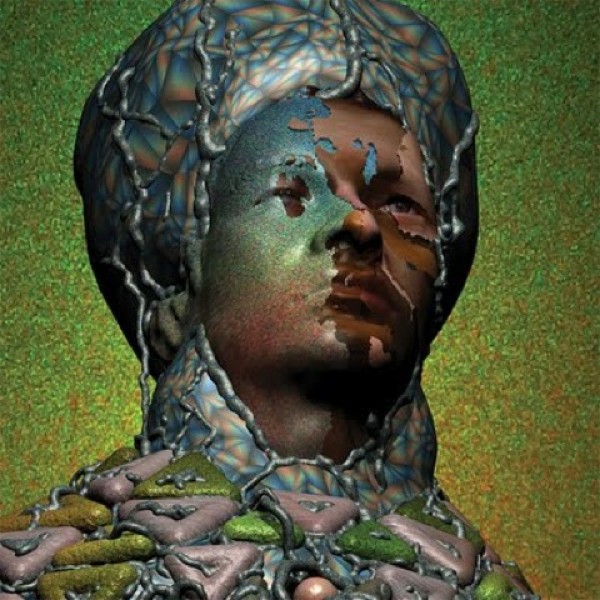
What makes Heartland especially significant though, is how Pallett's orchestration is so fundamental to its composition, rather than ornamental (like most music that is labeled symphonic or chamber pop). In songs like "Keep the Dog Quiet" and "Oh Heartland, Up Yours!", plucked strings and orchestral woodwinds happily take the place of guitars, with Pallett cooing agreeable melodies of doubt and faith over the top. In "Lewis Takes off His Shirt", Pallett effortlessly combines orchestral elements with bubbly synthesizers and electronic drums, building a sound that is incredibly unique and forward-looking. Owen, along with a few others (such as Nico Muhly and Sufjan Stevens), lives as a diplomat that is willing to shake hands on both sides of the classical-pop music aisle, while also existing in a kind of world of his own. This is not to imply that his music is easily accepted on either side of the spectrum, but instead that it is in the business of messy reconciliation between the musical forces. And fortunately for us, for all the big ideas behind the music, Heartland never feels stuffy or academic. This is Owen Pallett at both his sharpest and most accessible, bursting with ideas and creativity, and boldly opening up doors that pop musicians have been knocking on for years.
12.12.2010
#16. The Tallest Man on Earth - The Wild Hunt
In the same way that camera work plays such an important role in films, how an album is produced plays a crucial role in how recorded music is perceived. No camera angle, production choice, or vocal texture is ever neutral or accidental. When approaching a work like The Wild Hunt, you'll hear few people talk about the production of such an album, but I promise that you will forget you are listening to an acoustic album by the time you get through the opening track because of it. After all, its easy to write off Kristian Matsson's blatant Dylanisms and simplistic folk songs as cashing in on pop culture's deification of Bob Dylan or recent folk trends in indie music. But there is something so majestic about the minimal production and honest songwriting of The Wild Hunt, that it seems to transcend its role as mere imitation. You won't mind that a few plucks on a banjo and some foot taps are the only non-acoustic guitar instruments on the album. Instead you'll hear the cracking and clipping of Kristian Matsson's crooning vocals; the smoothness of his eloquent guitar playing contrasting with the cracking harshness of his vocals; the consistent vocal qualities against the ever-changing guitar textures of each song. Strangely enough, the one musical anomaly of the album, the piano-led "Kids on the Run", will have you glad that Matsson keeps his style and production choices the way they are for most of the album. Although The Wild Hunt isn't too different stylistically than anything else Matsson has released, it finds Matsson developing as an artist and songwriter it just the ways you'd hope. The Tallest Man on Earth's take on folk is more modern thematically than you think at first, its lyrics resembling a mix between Fleet Foxes and Robert Frost rather than anything Dylan wrote. In an interview with Face Culture, Matsson states that despite his obvious influences, he never intended to write his music in any particular tradition. In fact, while being transparent about his influences, he also never tries to hide his European origins. In the title track, Matsson recalls the ancient European folk myth of the same name, using its imagery to talk about living a hopeful life knowing death is at the end of it. Finding introspection and meaning in pastoral settings and folk mythologies, Matsson discovers something convincingly authoritative and ancient about 'folk' because of his complete capture of the poetic language. His interesting word choice and phrasing can sometimes be strange, but is always refreshing and bold: successfully avoiding the songwriting cliques that are so prevalent in pop music today. Ultimately though, Kristian Matsson continues to be incredibly successful because he's not shy about where his musical influences come from, but is also persistent on making the sound his own. Although very different, The Wild Hunt is one of the best folk-revivalist album since Fleet Foxes' self-titled release in 2008, and that's definitely saying a lot.
12.09.2010
#17. Brooke Fraser - Flags
The CCM Industry has been undergoing some tough times as of late. The generation that grew up listening to only that which played through the CD samplers of Christian Supply seems to have subconsciously become aware that the Christian music industry is neither more honest or more holy than its secular counterparts: only less original. Amidst the rubble of a kind of music that was created on being 'safe', a few voices have risen from within the industry that have reclaimed the artistic and risk-taking vision of the independent music scene for themselves (see Jon Foreman, John Mark McMillan, and Derek Webb). Brooke Fraser, the songwriting and vocal force behind Hillsong United, has had a quiet but substantial solo career that has culminated with the 2010 release, Flags, her most consistent and mature album yet. Make no mistake; this is straight-up pop/rock at its simplest and most concise. But under the command of Fraser's tested vocal quality and smart writing, its hard to be cynical. Opening with the joyously carefree, "Something in the Water", Fraser shows off a more organic and folk-oriented sound that manages to sound fresh and current, while still being incredibly accessible. What Flags does that so many singer-songwriter albums fail to do is capture a sound that doesn't feel contrived or disconnected from the songwriting. One of the primary reason that Flags succeeds in this respect is that this is the first album that Fraser actually produced herself: and the results really do pay off. Whether she is experimenting with folk-country in "Coachella" or Vampire Weekend antics in "Jack Kerouac", her keen sense of melodic lyricism and pop threads through each song, shining with understated confidence. At the end of Crows & Locusts, we even hear Christian music folding in on itself with Fraser using the words of a popular worship song to talk about the hardships of famine and growth. And even so, you can't help but wonder if she doesn't see a little of herself when she sings about a girl who "Feels her sweat in the ground and the burn in her nose/And the knowing in her guts/Something's still gonna grow/She ain't leaving till it does". Triple credited in this album as the vocalist, songwriter, and producer, Brooke Fraser has toiled her artistic vision and created a very personal, labor of love. Even more, Flags points to exciting directions for new movements in Christianity-informed music: here, a refreshing breathe of bold honesty and self-expression. 12.08.2010
#18. Daft Punk - Tron: Legacy OST
Rather than creating any memorable themes or motifs in typical Hollywood fashion, most of the tracks highlight short 8-note rhythmic patterns that repeats on either strings or a synth throughout the entire track in the same way Daft Punk did in so many of their tracks off of Discovery and Human After All (and was even criticized for). Daft Punk themselves, compare their work combining symphonies and synths here to their contrasting of metal and disco in Discovery, and it is for sure every bit as successful. The Tron: Legacy score is an example of a true feedback loop; the culture of minimalism so intertwined within itself that trying to figure out where Daft Punk is getting inspired from is nearly impossible. While the film itself seeks to reveal the similarities between the computer world and the real world, Daft Punk's ambitious film score reveals how similar the worlds of Daft Punk, Hanz Zimmer, video games, and Steve Reich truly are.
12.07.2010
#19. Yeasayer - Odd Blood
12.06.2010
#20. Broken Bells - Broken Bells
For all the hype that had been built up around the idea of Broken Bells, their self-titled first release sounds very much like what you'd expect. James Mercer, the front man behind the indie pop miracle band The Shins, has teamed up with the trip hop, entrepreneurial producer and musician Danger Mouse (responsible for acts such as Gnarls Barkley and The Gorillaz). Even by the first the time the rumors of their collaboration broke out, they were destined to be the indie scene's "next big thing"; 2010's version of The Postal Service. And in many ways, Broken Bells offers some of the very same motivators and claims to fame that Ben Gibbard's indie-gone-eletronica band did back in 2003: hearing everyone's favorite indie songwriter recontextualized. But rather than utilizing these more rigid models of genre-crossing, Broken Bells finds more creative and organic way to reconcile the gap between indie rock and hip-hop. Because the two music icons actually got together and recorded in a studio like a normal band would, the resulting songs quite often find that sweet spot between experimentation and accessibility. In a musical culture where sampling and imitation are the popular forms of genre-crossing, its refreshing to hear two artists from different backgrounds who are just sitting down and making music together. Being his first real release since The Shins' third record, "Wincing the Night Away" in 2007, Broken Bells also gives room for some of the darker, more cynical aspects of Mercer's unique and eloquent songwriting. Having recently left the Sub Pop label and fired two members of The Shins, there's no question that Mercer has had an eventful couple years. Fortunately, Mercer's existential thoughts on life and love in "The High Road" and "Sailing to Nowhere" are some of Mercer's best songs since Chutes Too Narrow. In one of the best songs on the album, we find Mercer profoundly depressed about the purpose of life in the bubblegum wrapper lines of "Your Head is on Fire", once again proving his mastery of the craft. Ultimately, while the collaboration couldn't possibly live up to the ridiculous buzz that surrounded its formation, it did provide a comfortable space for these two respected artists to create and collaborate in a way that is a joy to hear.
The Feedback Loop
A feedback loop refers to any system in which the output of an event results in the same repetition or assimilation of this output into the input of new events (so says Wikipedia right?). The name of my blog, The Feedback Loop, refers to the way culture, music, and specifically different kinds of music seamlessly feed back into themselves, creating a constant mishmash loop of art, media, and entertainment that we commonly call popular culture. The blog will review and comment on new music through this lens, as well as through the lens of music journalism and analysis.
I'm excited to get it underway, and will be starting off with a countdown review of my favorite music releases of 2010, starting with #20, which will be posted within the next couple of days. It's been an awesome year in music and this is my way of catching up with all the interesting stuff that's been released this year. Stay tuned, thanks for reading, and please subscribe!
Currently listening to:
Janelle Monae - Locked Inside
I'm excited to get it underway, and will be starting off with a countdown review of my favorite music releases of 2010, starting with #20, which will be posted within the next couple of days. It's been an awesome year in music and this is my way of catching up with all the interesting stuff that's been released this year. Stay tuned, thanks for reading, and please subscribe!
Currently listening to:
Janelle Monae - Locked Inside
Subscribe to:
Posts (Atom)