4.30.2011

Panda Bear - Tomboy

6.5


04/11/11
Paw Tracks

The infamous psychedelic synth group, Animal Collective, has always been a unique representation of the endless tug-of-war between the avant-garde and pop that currently dominates that which we call "indie music". What's been unique about Animal Collective is that the two sides of this tug-of-war have always been represented by the two vocalists of the group: Avey Tare and Panda Bear. Panda Bear has always been the voice of blissful melody and poppy nostalgia while Avey Tare has always represented the voice of untamable musical experimentation and production. Although you might never know it from listening to the unifying sound of Animal Collective, the idea that Animal Collective was some kind of a "collaboration" between the two artists had always been at the roots of the band. Unfortunately, to me, the collective sound of their collaboration has always left me feeling a bit underwhelmed by the solo work of these two musicians and Panda Bear's newest record seems to be no exception.

Following up his critically-acclaimed album from 2007, Person Pitch, Panda Bear adds some much appreciated fidelity to the mix in his newest release, but maintains many of the general vibes from his prior album. Tomboy finds Panda Bear diving even deeper into the depths of his laid back, surfer attitude. In one of my favorite tracks from the album, Surfer's Hymn, Panda Bear directly references surfing and finds philosophical consolation in the water and waves in typical Panda Bear style. The percussion rattles and bounces amidst the bubbling synths and soaring melody and creates a great flow Unfortunately, Surfer's Hymn is probably the most sonically dynamic track on the album with most of the other songs sitting on one sound or feel for the entire duration of the song. While I totally understand what he's doing here, many of the songs just doesn't appeal to me in the way that makes me want to return to them unlike more of the tracks from Person Pitch or the Animal Collective albums.

In fact, I really like some of the sounds Panda Bear is working with here. I love the sawtooth synth at the beginning of the title track "Tomboy" or even the quiet pianos in "Scheherazade". I also like that Panda Bear is experimenting with these different instruments and moods, expanding the washed-out guitars and samples that dominated Person Pitch. However, more than anything else, the lack of explosive production and dynamic songwriting here has made me increasingly aware of what makes the collaboration of Animal Collective so great. While this album lacks focused aggression and unpredictable sonic experiments to me, Avey Tare's solo release last year lacked the undeniable hooks and melodies that Panda Bear is known for. So while I appreciate hearing the differing perspectives between Panda Bear and Avey Tare, these solo albums mostly appreciate the collaboration even more and get me more excited for the next Animal Collective album.


Panda Bear - Surfer's Hymn

4.27.2011

TV on the Radio - Nine Types of Light

8.5


04/11/11
Interscope Records

I think its safe to assume we were all a little spoiled by TV on the Radio's 2008 release, Dear Science. To think that a band with an early discography as noisy and distorted as TV on the Radio's could go on to release something so instantly accessible, perfectly sequenced, and undeniably catchy was something of a strange, indie listener's guilty fantasy. While many of the songs from that album worked great as singles, Dear Science also had an amazing amount of flow and listenability as an album, easily making it both one of the best albums of the year and the best work of their career. "Family Tree", the beautiful string-led ballad from Dear Science, was perhaps the only track from the album that felt a bit out of place to me. The deeply personal lyricism and organic instrumentation of the track felt strange up against the punchy drum loops and aggressive lyrics of tracks like "Dancing Choose" and "Red Dress". Following up that track, their new album seems to set out to create a much more personal and emotional album that might have provided a better space for a song like "Family Tree".

After considering the actual sounds that make up this album, you'll notice that Nine Types of Light doesn't deviate much from the sonic groundwork of Dear Science. This, of course, is not a bad thing at all in my books. You'll still find the Prince-esque falsetto choruses in songs likes "Keep Your Heart" and "You". You'll still find killer bass lines in "Will Do" and the fanfare horn blasts in songs like "New Cannonball Blues". Furthermore, frontman Tunde Adebimpe sounds as good as ever, continuing to have his uncanny knack for writing melodies that are as catchy as they are inventive.

Even so, Nine Types of Light is indeed a different kind of album as a whole. Opening with three slower tempo songs, the guys seem to be less concerned with convincing everyone that they are energetic and creative and more concerned with representing themselves in an honest way. In fact, a large part of the album deals with the topic of relationships and love, something somewhat new for the band. Because of that, Nine Types of Light feels like a much more introverted album, both musically and lyrically. Songs like "You" and "Will Do" are written like love notes from the perspective of direct experiences and emotions. Whereas Dear Science felt a bit heady in its critiques of society and culture, Nine Types of Light turns inward and examines the self. Naturally, this makes the album feel a bit less "important" and intentional at times. As I mentioned before, as the album pushes on to its end it actually finds itself returning to more extroverted themes in songs like "Repetition" and "Caffeinated Consciousness". Unfortunately, to me this is where the album loses a little steam as well.

Because the album is in someways divided into two with most of the slower songs packed to the front and most of the upbeat songs packed toward the end, Nine Types of Light definitely does feels a bit uneven to me. This 'flow' problem is what a lot of critics have been calling Nine Types of Light's primary flaw and I think do now understand what they mean by this after taking a lot of listens. I would much have preferred for the album to have stayed closer the conceptual and musical themes of the first half of the album. After the heartfelt words of "Will Do" are sung, "New Cannonball Blues" feels almost like the startling beginning of a new album.

At the same time, I don't want to act like the album's lack of focus and strange organization has kept me from thoroughly enjoying the songs here. As TV on the Radio pushes forward into mainstream success, Nine Types of Light has plenty of hits on it to satisfy the masses. Even if am not necessarily really feeling the way they chose to lay out the album, Nine Types of Light still manages to take all the accessibility and sonic fidelity of Dear Science and use them to create another great set of songs with that distinctive afro-funk touch that we all know and love.


TV on the Radio - Will Do

4.19.2011

Peter Bjorn and John - Gimme Some

7.0


Startime
03/28/2011

Poor Peter, Bjorn, and John. No matter how good anything they release will be after Writer's Block and their big single, Young Folks, they will always be labeled as a one-hit wonder. Gimme Some is the sixth full-length album from the Swedish indie rockers and finds them returning to the simple, pop/rock sound that got them on iPod commercials and the entire world whistling along. And while some will certainly call this album nothing more than PB&J attempting to cash in on their previous successes, Gimme Some has got enough sunshine pop tunes to keep even the toughest cynics smiling.

Starting with "Tomorrow Has To Wait", PB&J seems determined to show the world that they've got more where Writer's Block came from. The first few tracks are pure, indie bubblegum. The first track, "Tomorrow Has To Wait", has a catchy hook full of pentatonic goodness, even though the lyrics are laced with enough cliches to be a song that you might want to graduate high school to: "It's too late/But tomorrow has to wait/It's the time of your life/So tomorrow has to wait". Even still, the track is a sign that PB&J are serious about their return to fun and lightheartedness and has enough substantial hookyness to keep this one stuck in your head. Where their last album, Living Thing, featured non-traditional song structures, drum machines and synths, and general "more sophisticated than thou" experimentation, Gimme Some brings back the return of the punchy drums and singalong choruses that made Writer's Block so successful.

Their signature high-energy drumming and catchy bass groves are in full force here, proving how full their simple, three-piece band can feel, with the youthful energy of The Beach Boys with the added effect of Peter Moren's John Lennon-esque vocals. But you won't find any ballads or breaks in uptempo pop songs here. Gimme Some never lets up on the breakneck drums and hard hitting electric guitars, perhaps described most fittingly in the song "(Don't Let Them) Cool Off". But I couldn't help feeling a little overwhelmed by all the over-the-top energy of the album at points. Overall, the first half of the album, if not a bit one-dimensial, is a fun and catchy group of pop songs. Perhaps its just the obsessive attention I put on how albums flow, but most of the songs after the melodic wonder "May Seem Macabre" aren't really doing much for me. In the songs that find the band returning to some of their dirtier pop-punk roots, most notably "Black Book", the mix just feels cluttered and claustrophobic.

The problem isn't that there aren't enough hooks or big beats in Gimme Some, its just that once you get halfway through the album you begin to get the feeling that PB&J, despite their best intentions, are trying a little to hard to convince you of how fun they are. Luckily, there are enough memorable tunes here to put it above any of PB&J's more recent efforts and their return to straightforward pop rock turns out to really suits them well. A lot of these songs bubble and burst with joy and summertime bliss and I can totally seem myself returning to this one come July.


Peter Bjorn and John - Tomorrow Has To Wait

4.17.2011

Favorite Radiohead Songs of All Time

I know Radiohead's most recent album, The King of Limbs, was "sooo two months ago", but in light of all the mixed reviews its been getting and the recent attention the band has been receiving, I thought it would be fitting to make a list of my favorite Radiohead songs of all time. I can't say, after making this list, that I understand any better how The King of Limbs fits in the grand scheme that is the Radiohead discography, but oh well. Oh and by the way, I don't claim to be a Radiohead expert or even the world's biggest fan; these are the ones that have stuck with me the longest.


Honorable Mentions:
-Karma Police
-Bloom

10. Creep
While a lot of "hardcore" Radiohead fans tend to overtook their most popular single of all time behind, I find "Creep" to be a great representation of how even from very early on, Radiohead was able to write music that resonated with listeners in a very special way. After seeing a cover of the song sung by a choir in the trailer for the recent film, Social Network, it became so very clear to me that there was something significant about the way this band would come to inhabit the voice of an entire generation of people entangled in issues of self-image, individuality, and alienation.

9. High and Dry
If you listen to this one up against the other songs on the list, you'll find its pretty striking how much Radiohead has changed their sound. A single off their second 1995 alternative rock album, The Bends, "High and Dry" represents the best of Radiohead's more mainstream pop/rock sound and is a good reminder of how good the band once was at this sound.

8. Let Down
The big single off of OK Computer, "Let Down", saw Radiohead mastering their new experimental rock sound and perfectly combining it with the mainstream rock sound of The Bends, their previous album. "Let Down" was just the kind of anthem that the band needed to boost them into the stratosphere of global popularity and stadium rock stardom. Plus, the cute, sine wave tinkles at the end of the album are a naive, but cordial prophecy of the electronic experimentation of Kid A that was just around the corner.

7. Paranoid Android
This incredibly strange track off OK Computer shows off Radiohead's bizarre harmonic language that shows off the band's uncanny use of traditionally non-pop chord progressions and key changes. Taking cues from progressive rock and the late Beatles albums, this multi-sectional song had just enough dark sonic exploration and explosive electric guitar fuzz to win over fans from all sides of the "rock" spectrum.

6. House of Cards
Who honestly knew Radiohead still had this side of them around? This often overlooked, reverb-laden track off of In Rainbows, has got to be one of the most simple songs Radiohead has ever released. Its soaring melody, love affair-themed lyrics, and simple production makes this one my favorite "ballad" (if you want to call it that) by Radiohead and shows that for all Radiohead's contrived instrumentation and pretentious lyrical ideas, they can still write a simple love song and pull it off with a convincing amount of tenderness.

5. Optimistic
This more "classic Radiohead" sounding, track off of Kid A is often seen as the one misnomer in the Kid A album. Whereas the rest of album retreats from incredibly popular sound that the band achieved on their previous record, OK Computer, "Optimistic" finds a lot of overlapping ground with it. Featuring a full-fledged rock band Fortunately, Optimistic is simply too good have been left off a Radiohead album and features just enough lyrical and sonic experimentation to fit in well enough on the album while at the same time giving older fans something to hold on to.

4. Reckoner
Only after three albums of electronic experimentation could Radiohead be free to release such tracks like Reckoner of pure, simple, unrestrained beauty. In "Reckoner", a track off of In Rainbows, we are again reminded of how sweet and powerful Thom Yorke's haunting falsetto vocals truly are. Yorke's long sweeping melodies contrast up against the assorted percussion from the rest of the band and culminate in a beautiful drop-out bridge section, only to return to the previous section with layered strings and percussion in the arsenal.

3. Idioteque
This one is the crown of Kid A and perhaps the climax of the album as a whole. Using the sounds of house and techno beats to drive the unnerving post-apocalyptic tension in this track, Idioteque is the prime example of what I would call Kid A's thematic emphasis on 'digital anxiety'. The beautiful chorus melody contrasts starkly with the ghostly atmospheric noises and hollow drum machines and making Idioteque land somewhere between a dance song not meant for dancing and a rock song without any real instruments. However you classify it, it's straight up genius and that's before hearing the energetic live versions that made turned it into a fan favorite.

2. Airbag
The opening distorted electric guitar notes that begin "Airbag" and OK Computer are truly representative of the more experimental rock genre in which they were headed as well as the lyrical ideas of the album. While not a true concept album, OK Computer dealt quite directly with issues of consumerism, alienation, industry, and apocalypse and "Airbag" opens with these evocative lyrics: "In the next world war/In a jackknifed juggernaut"/I am born again" and "In an interstellar burst/I am back to save the universe". People have linked the 1997 album to the millIt was all of a sudden very clear that Radiohead's era of soul-searching and personal lyricism was over and they were entering into the strange, mysterious ground of concept.

1. Everything in Its Right Place
Okay, so I guess I'm a sucker for album openers. To me, this first track off of Kid A is not only my favorite Radiohead song, it was also the face of the new sound Radiohead wanted to project with their shocking, new electronic sound in Kid A. The smooth electronic organ, the strange vocal manipulations, and the uniquely Radiohead harmonic language just perfectly sums up the band for doing what they are best at: constantly redefining what it means to be a rock band in our ever-changing cultural landscape through beautiful musical experimentation and masterful songwriting.

4.02.2011

Typhoon - A New Kind of House EP

8.0


Tender Loving Empire
03/08/11

When I first heard Typhoon was a big "epic"-sized band, I'll admit I wasn't exactly super-excited to hear what the talk was all about. Even I, the only guy who thought Sufjan Stevens' most recent album was the best album of 2010, was beginning to become weary of bands who claim to be "bigger-than-life". Maybe its just the Oregonian in me talking, but Portland's Typhoon newest EP has seemed to have revived my faith in the power of "big" once again. Typhoon, more than any other band I've heard of recently, is most certainly that. Featuring 12 band members that could function as their own personal marching band, Typhoon has all the symphonic intricacy of a Sufjan Stevens arrangement and all the communal energy of Arcade Fire's Funeral all contained in a relatively short 5-song EP.

Fortunately, Typhoon relies on their big size in a way that feels musically fundamental to their sound instead of getting in the way of the songs. So when you hear the mariachi-style horns or the crowd of people singing in the opening track, "The Honest Truth", you're hearing the real thing. A New Kind of House is the followup to last year's full-length, Hunger and Thirst, and finds the band becoming a much more cohesive band in the studio. Creating what frontman Kyle Morton calls "walls of sound", A New Kind of House feels like more of a family than a band at times. Their familial themes and lyrics left a heavy impression on me, often leaving me wanting to be adopted and sing right along with them. The fact that they tour in 12-passenger vans and live together in a single studio apartment proves that these guys aren't just adopting some kind of trend: they live it.

You'll notice that at times these songs can sound messy and even a bit crowded at points, as if their big sound didn't quite fit in between the two audio channels on your headphones. And while I'm sure this will turn off some, these songs are full of great moments that only a band this big could produce such as the soaring melody in "Kitchen Tile" or the punchy breakdown in "Claws, Pt. 1". The mix does a great job of bending and fumbling through the montage of instruments, highlighting different parts of this indie-orchestra at different times, but still often keeping the big picture in mind. And while the EP is a bit shorter than I would have preferred, that is always the sign of a good thing. According to Morton, A New Kind of House acts as something of a bridge in between Hunger and Thirst and what comes next. Judging from their recent appearance at SXSW and their plans to begin working on their next full-length this summer, I think its fair to say that this EP isn't the last you'll be hearing from Typhoon.


Typhoon - The Honest Truth

3.28.2011

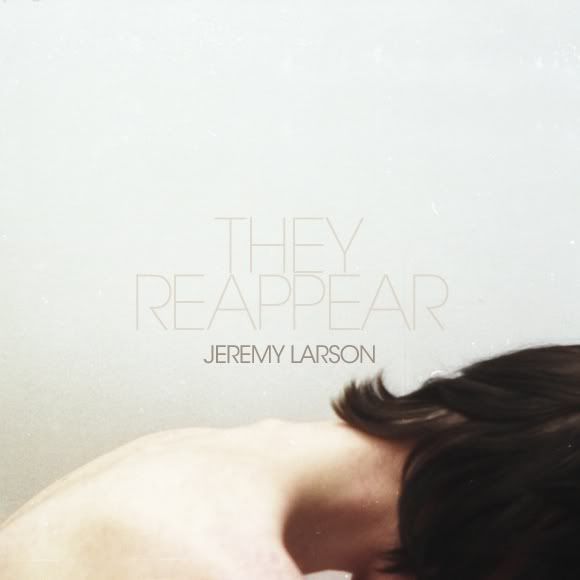
Jeremy Larson - They Reappear

7.5


Outlook Music Co.
03/15/11

They Reappear is Jeremy Larson's newest self-made album that sees Larson take his lovingly crafted songs in an all new direction. Turning from the more alternative rock sound of his previous album, Salvation Club, They Reappear ditches the electric guitars and thrusts Larson's soaring string arrangements to the front of the mix. Performing all the instruments aside from some guest drumming in a few tracks by MuteMath drummer Darren King, They Reappear is both an orchestral pop album and a solo album unlike anything you've probably ever heard in either of those genres.

In most albums that are made almost completely by one person, sacrifices in certain elements of the songs are almost always present. But Larson's attention to detail is almost unprecedented here; check out the bass line on "Beside Manner" or the string sections on "Parasomnias" for example. Larson is no amateur arranger or singer-songwriter, successfully crossing those pesky classical/pop lines with no effort at all. His string parts are full of subtlety and grace, using plenty of extended techniques and string slides to keep things interesting. Again, not only does Larson play all the instruments on the record, he also produced and mixed the album himself, giving They Reappear an incredibly cohesive and unified feel. I really appreciate Larson's faithfulness to his limited instrument palette and unique harmonic language here and it really does pay off when you listen to the album straight through.

Larson has a particularly good ear for unique chord progressions and melodies. Harmonically, vocally, and thematically, Larson fits in nicely with the recent trend of alternative pop/rock bands transitioning to softer, indie pop sound such as Copeland's Eat, Sleep, Repeat and Sleeping at Last's newer recordings. Larson's breed of orchestral pop is usually content in sitting on slower tempos, favoring light drums and delicate piano over the quicker-paced and aggressive sound of other artists who have utilized string parts like Owen Pallett or John Vanderslice's newest material. Its an exciting new direction for Larson in particular, as he sits in a unique spot as a partially trained classical musician with a good ear for songs as well. In my recent interview with Larson, he mentioned that the album was at first going to be instrumental and act as a sort of resume for diving into the world of television and film scoring. A lot of the instrumental tracks on the album are incredibly strong and provide some of the most poignant moments on the album such as on "Night Terrors" where Larson's fragile piano chords are contrasted against Darren King's frantic drumming or "Provoke" that shows off Larson's music-school piano skill and darker compositional style.

As an album, the songs drift in and out, often blurring the lines between instrumental interludes and full-fledged songs. The songs run into one other, providing a long and continuous experience that definitely lends itself to the overall affect on the listener. However, this part of the album's strengths is also the album's most noteworthy weakness as well. I found it easy to put the record on and let the songs pass by me without a lot sticking out. For the most part, I am totally okay with that as catchy choruses aren't exactly what this album is all about. However, I felt that in a few of the more poppy songs like "Riochet" and "Empire", the songs could have developed more and created a stronger sense of arrival at those choruses both vocally and instrumentally. These are dainty pop songs that have a lot of color and character, but sometimes lack the dynamics required to create those truly memorable moments that you expect in a song of this style. Vocally, I felt like even something as simple as more harmonies and overdubbing could have really brought out the melodies in these songs.

However, I don't want to downplay the personal accomplishment that is They Reappear. Despite some of the problems I had with it, its an incredibly impressive endeavor and is quite satisfying in its own right. Larson has a lot of original ideas and all the musical talent in the world to deliver a great execution. Whether its in a film score, another solo album, or more collaborations with other artists, I definitely am looking forward to hearing more from him. And if you appreciate the classy, more soft rock side of indie pop, you'll certainly find a lot to like in the They Reappear.


Jeremy Larson - Ricochet

3.26.2011

Interview with Jeremy Larson

Jeremy Larson is a solo artist and collaborator with bands like Eisley, Sleeping at Last, and MuteMath. As a multi-instrumentalist and self-producer, Larson is redefining what it means to be a "solo artist". His new album, They Reappear, was just released last week and actually broke into the top 5 sells on bandcamp on the day of its release. Our short interview is below, so take a read and make sure to also check out his new album streaming over at his band camp.

Photobucket

The Feedback Loop: Your recently released album, entitled They Reappear, has a really unique focus on strings and orchestral arrangements compared to the more standard alternative-rock sound on your previous recordings. What was the thought process and concept behind the album?

Jeremy Larson: After the last album, Salvation Club, I was really unsure of what I wanted to do musically. I felt like there was plenty of “indie pop” music out there already. There were bands that do that better than I do, and I was a little burnt out on writing in that style. I was toying with the idea of doing an instrumental album; something that would serve as a sort of resume for getting more into TV and film. But I still wanted to write songs, so I basically married the two on one album. There are 10 traditional “songs”, and 6 additional orchestral instrumentals that play off of themes and concepts of the songs.

TFL: The album's got a very classy, impressionist feel to it. What's your background with classical music and how does that show up in your music?

JL: I was a piano major in college, and became completely obsessed with Ravel. His piano works played a huge part in the type of music I play. Well, him and Jonny Greenwood. I guess my music may show a bit of their influence, but probably only on a very elementary level.

TFL: I hear that you actually performed almost all of the instruments on the record including the string parts. Truly impressive endeavor. How long have you been a multi-instrumentalist and what all instruments do you play?

JL: That’s just the way I’ve always done things. I strongly considered trying to hire a string ensemble to make this record since I didn’t know how to play the violin or the viola. But working with string ensembles is very expensive, even more so when the writing and recording process are usually one and the same for me. On the other hand, I’m not sure I have the energy to do it this way again. It’s extremely tedious recording the same parts over and over and over; especially being so new to these instruments. In order to achieve that orchestral sound, I have to record myself as if I was each individual member of the orchestra. I’m really not sure what I will do for the next album. I’ve made a lot of new friends recently that are string players, and I’m hoping to collaborate with them if they are willing. On this album, I played the piano, bass, some drums and percussion, guitar, keys, violin, viola, cello, acoustic bass, and trumpet.

Photobucket

FBL: So you've just released a new album, DVD, and had what looks like an awesome CD-release show with a 20-piece orchestra and Darren King from MuteMath drumming. What was your experience with that and what's your connection with Darren?

JL: Darren grew up in Marshfield, which is just about twenty minutes away from here (Springfield). We actually met at a coffee shop five or six years ago here in town. We’ve been friends ever since, and collaborate pretty frequently. Whenever he’s in town, we try to squeeze in at least one session together. He does drums for me, and I do some string work for MuteMath. The album release show was a dream. I’ve been working all week on mixing the audio, and the video should be finished within a few weeks. It was by far, the best musical experience of my life.

TFL: I noticed that you also have been working with Sleeping at Last, of whom I am a big fan. Tell us what working with them has been like.

JL: They are really, really, easy to work with. Ryan and Dan are both extremely talented string arrangers, and my involvement is usually just performing what they’ve written. Yes, I’m a pretty big fan myself, which is why I approached them in the first place about working together.

TFL: Do you have any plans to perform the songs on the album outside of your CD-release with your own personal orchestra? I can imagine it might be difficult to put that many people on the road.

JL: No plans right now. And yes, it’s just about impossible for someone at my level to take that large of a group on the road. I’ve become very close with many of the players that helped me out with the show and I’m hoping that we can at least do a few isolated shows in selected cities over the next year or two.

Photobucket

Thanks to Jeremy Larson for taking the time to do the interview and sharing his music with us. He seems like really nice guy and a super talented musician so again, check out his bandcamp, blog, and his new album and tell me what you think. Thanks for reading and look for my review coming within the next few days!